Google Fires Engineer Who Built the CLI Its Own Platform Was Missing — and the Tech World Takes Notice
A single firing at Google ignited a 336-comment firestorm on Hacker News Wednesday, touching off a wider reckoning over corporate IP law, developer trust, and whether big tech is quietly taxing the very innovation it depends on.
How this was made Verified AI
Every Intellegix briefing is generated from that day's broadcast and run through automated checks before it publishes — with a human paged on any flag. Here is the trail for this edition.
Fired for Filling Google's Own Product Gap

Google terminated engineer Justin Poehnelt after he built and shared a command-line interface for Google Workspace — the company's enterprise productivity suite covering Gmail, Drive, Docs, and Calendar — reportedly on his own time. The tool addressed a genuine gap: while competitors like AWS and Azure ship robust CLIs, Google Workspace's official command-line layer has remained thin, leaving IT and DevOps teams without easy scripting access to bulk user provisioning, automated calendar management, and similar operations. Poehnelt's tool became popular enough that Google's own security team noticed it. The response was termination, not recruitment.
The legal terrain amplifies the controversy. Most software engineering employment agreements carry broad intellectual property assignment clauses that can claim ownership of anything created during employment, regardless of company resources used. California's Labor Code Section 2870 carves out exceptions for inventions developed entirely on personal time without company tools, but enforcement is expensive and outcomes are uncertain. Commenters on Hacker News described the IP clauses at large tech firms as having grown more aggressive in recent years, with Google's policies reportedly among the most expansive.
The business irony is hard to miss. Platform ecosystems with vibrant third-party developer communities — Salesforce's AppExchange is the canonical example — derive competitive advantage precisely from engineers who learn the platform deeply enough to extend it. Firing Poehnelt for doing exactly that sends a signal across the industry. As one commenter noted, the chilling effect is the real damage: every engineer at a large tech company who maintains a side project touching anything adjacent to their employer's work is now recalibrating their risk tolerance. The downside is asymmetric — termination is possible, but there is no corresponding upside reward.
The episode also reopens a longer-running conversation about Google's relationship with developers. Years of abrupt API deprecations, the shutdown of Google Stadia, and a general sense that Google products can disappear without warning have eroded developer trust. Terminating an engineer for building an open-source tool that made Google's own platform more useful to paying enterprise customers is unlikely to help repair it.
A New SecureROM Exploit and the Crumbling Logic of Coordinated Disclosure

Two security stories landed on Hacker News Wednesday that, read together, sketch an uncomfortable picture of where vulnerability research is heading. The first is usbliter8, a newly released exploit targeting the SecureROM of Apple's A12 and A13 chips — the silicon at the heart of iPhone XS, XR, 11, and 11 Pro models. SecureROM is the first code that executes at boot, burned into read-only memory and serving as the root of Apple's entire hardware security architecture. A compromise at that layer persists across software updates and cannot be patched without physical hardware replacement. The exploit follows in the lineage of checkm8, which targeted older A5-through-A11 chips and underpinned years of jailbreak activity.
The second story is an essay by cryptographer Filippo Valsorda titled 'Vulnerability Reports Are Not Special Anymore,' which argues that the coordinated disclosure framework painstakingly constructed over decades is under structural stress. His core claim: that framework assumed exploits were rare and researchers were mostly hobbyists operating on timescales that allowed for vendor notification windows and orderly patch deployment. The current landscape — where professional security firms, government agencies, and criminal organizations run parallel research operations, and where AI-assisted discovery is accelerating the pace of vulnerability identification — makes the notion of a single coordinated disclosure timeline increasingly fictional.
The governance implications extend internationally. Frameworks like the Wassenaar Arrangement have attempted to treat exploit code as dual-use technology subject to export controls. The public availability of usbliter8 on a GitLab page illustrates how effectively those controls can contain information once it exists and is released. For vendors, the business consequence is straightforward: strategies that relied on slow-walking patches or disputing severity ratings to buy time are becoming untenable as the gap between discovery and public exploitation compresses. Faster patch cycles and more transparent security communication are likely to become competitive necessities regardless of corporate preference.
FUTO's Privacy-First Keyboard Challenges the Surveillance Bargain in Developer Tools

The highest-scoring story on Hacker News Wednesday — 570 points and 193 comments — was FUTO Swipe, a new swipe-typing keyboard from FUTO, a nonprofit organization with an explicit mission to build software that does not surveil users or harvest attention. Swipe typing requires decoding continuous finger trajectories into words in real time, accounting for variability across users, screen sizes, and the disambiguation of words with similar gesture shapes. The dominant existing approaches — Google's Gboard and Microsoft's SwiftKey — have had years of training data from hundreds of millions of users to refine their models. For FUTO to produce a result the community describes as competitive with or better than those products represents a genuine engineering achievement.
The privacy distinction is substantive, not merely rhetorical. Both Gboard and SwiftKey have historically transmitted keystroke data to their parent companies to improve their models. FUTO's approach is entirely on-device, meaning keystrokes do not leave the phone and cannot feed back into model improvement from live telemetry. The bet is that a model trained on carefully curated public data can match the performance of models trained on live behavioral data from a billion users. The early community verdict suggests that bet may be paying off — and the result functions as an existence proof that privacy-preserving design does not necessarily mean inferior products.
Elsewhere in developer tools, Bunny.net announced it would make its DNS service fully free with no usage limits, framing the move as an infrastructure contribution to the open internet. The decision highlights a structural asymmetry: large cloud providers can offer DNS free as a loss leader, cross-subsidizing from compute, storage, and networking revenue. Bunny's response — meeting zero with zero — is a straightforward competitive move, but it also draws attention to how bundling free ancillary services with dominant platform offerings can quietly foreclose competition. Meanwhile, Rhombus Language 1.0 arrived as a major update to the Racket ecosystem, introducing a more conventional surface syntax while preserving Racket's macro and metaprogramming capabilities. The central debate in the 53-comment thread: whether new syntax can actually expand Racket's user base or whether parentheses were never really the barrier to adoption.
Four-Dollar Wi-Fi Adapters, Sixty-Three Years of Cartography, and the Hardware Hacker Ethos
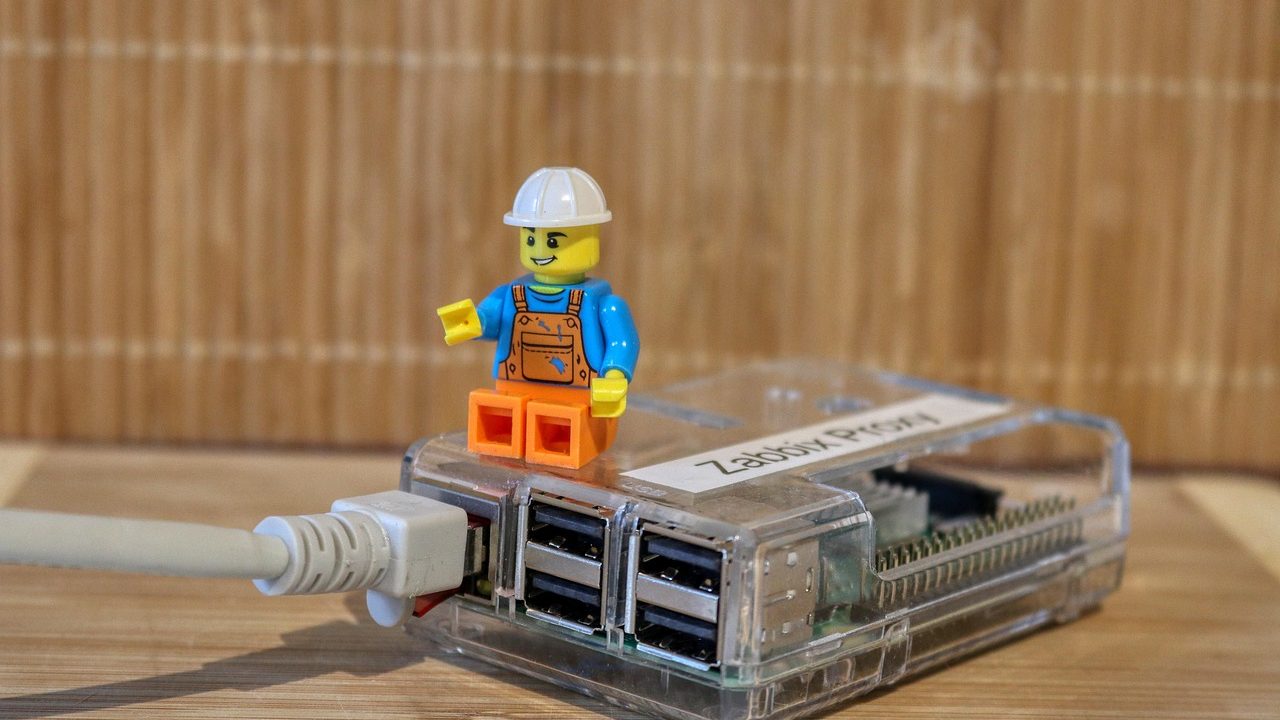
One developer found a way to run firmware on a Raspberry Pi Pico W — a microcontroller that retails for roughly four dollars and includes built-in Wi-Fi — that causes a host computer to recognize it as a USB Ethernet adapter. From the host's perspective the device presents as a wired network connection; the microcontroller handles the Wi-Fi side invisibly. Throughput and latency won't win benchmarks, but for embedded systems, older laptops, or industrial hardware with USB ports and no native Wi-Fi, the solution is practical and essentially free. A separate macOS fix drew similar appreciation: certain MacBook models exhibit cursor lag after the display idles, and the workaround involves instructing macOS to record one pixel of screen output every ten seconds, tricking the power management system into treating the display as continuously active. The diagnosis required meaningful reverse engineering of macOS display management internals; the fix is a trivial timer loop.
The story drawing the most points among the humanistic entries — 490 — was a profile of Jerry Gretzinger and his map. Gretzinger has been adding to a single hand-drawn cartographic artwork since 1963. The work now spans hundreds of square feet of panels and incorporates a card-based randomness system: certain cards instruct him to destroy sections, others to expand in particular directions. The HN community's enthusiasm for this project says something about what engineers find beautiful. The map is the anti-SaaS: no subscriptions, no deprecation schedules, no pivots. Just a person sustaining a creative act across most of an adult lifetime because the making itself is the point.
A Show HN entry for an ASCII 3D rendering engine at glyphcss.com earned 158 points by demonstrating that readable 3D geometry can be approximated entirely through the visual density of text characters — an approach with roots in the demo scene culture of the 1980s and early 1990s. Alongside it, researchers are reportedly experimenting with printing Gaussian splats — the novel-view-synthesis representation format behind recent 3D reconstruction demos — as physical objects, translating a screen-optimized data format into something tangible.
AI Agents, World Models, and the Gap Between Benchmarks and Production
A research paper from Alibaba Cloud's Qwen team — Qwen-AgentWorld — is advancing the idea of language world models for general AI agents: training a model to simulate how the world responds to actions, creating an internal planning environment that reduces the need for costly real-world interaction during each training step. The practical appeal for production deployments is straightforward. One of the core bottlenecks in deploying AI agents today is the cost and latency of every planning step requiring a live API call or system interaction. An agent that can simulate likely outcomes internally before committing to action could plan far more efficiently.
A detailed technical analysis of the enemy AI in FromSoftware's Elden Ring — a game celebrated for its difficulty — offers an instructive counterpoint. The analysis reportedly found that enemy behaviors rely on simple state machines, with no neural networks, complex planning algorithms, or tree search. The sensation of facing an intelligent, intentional opponent is produced entirely by animation quality, hitbox design, and the timing of behavioral triggers. The result illustrates a point often lost in AI coverage: the success criterion for game AI is not optimality but the feeling of challenge. An opponent that plays optimally is not enjoyable.
A separate piece arguing that evaluation startups — companies providing AI model benchmarking and scoring infrastructure — face structural challenges gained traction in the comments. The core claim is that the models being evaluated improve rapidly enough to render evaluation frameworks obsolete, while enterprise buyers increasingly develop in-house evaluation pipelines as tooling matures. That concern connects directly to a deeper question about world models: how does a practitioner validate that an agent's internal model of the world is reliable enough for a given deployment context? The community's working assumption — that world models are the key capability unlock for general agents — may be technically correct while the business adoption curve lags significantly, because the deployments that would benefit most from capable agents are precisely those where model error carries irreversible consequences.