IPv6 Crosses 50 Percent, Linux Purges Unsafe API, and iOS Apps Know More Than You Think
A milestone for internet infrastructure, six years of kernel housekeeping, and a research app exposing the hidden reach of iOS apps headline a wide-ranging Sunday on Hacker News. From browser security myths to slow-breathing neuroscience, the day's stories span decades of technical debt and the cutting edge of AI infrastructure.
“CORS protects the user from malicious websites, enforced by the browser, not the server from malicious clients. The server merely declares its preferences.”
How this was made Verified AI
Every Intellegix briefing is generated from that day's broadcast and run through automated checks before it publishes — with a human paged on any flag. Here is the trail for this edition.
The Internet's Long Transition: Google Tips IPv6 Past 50 Percent
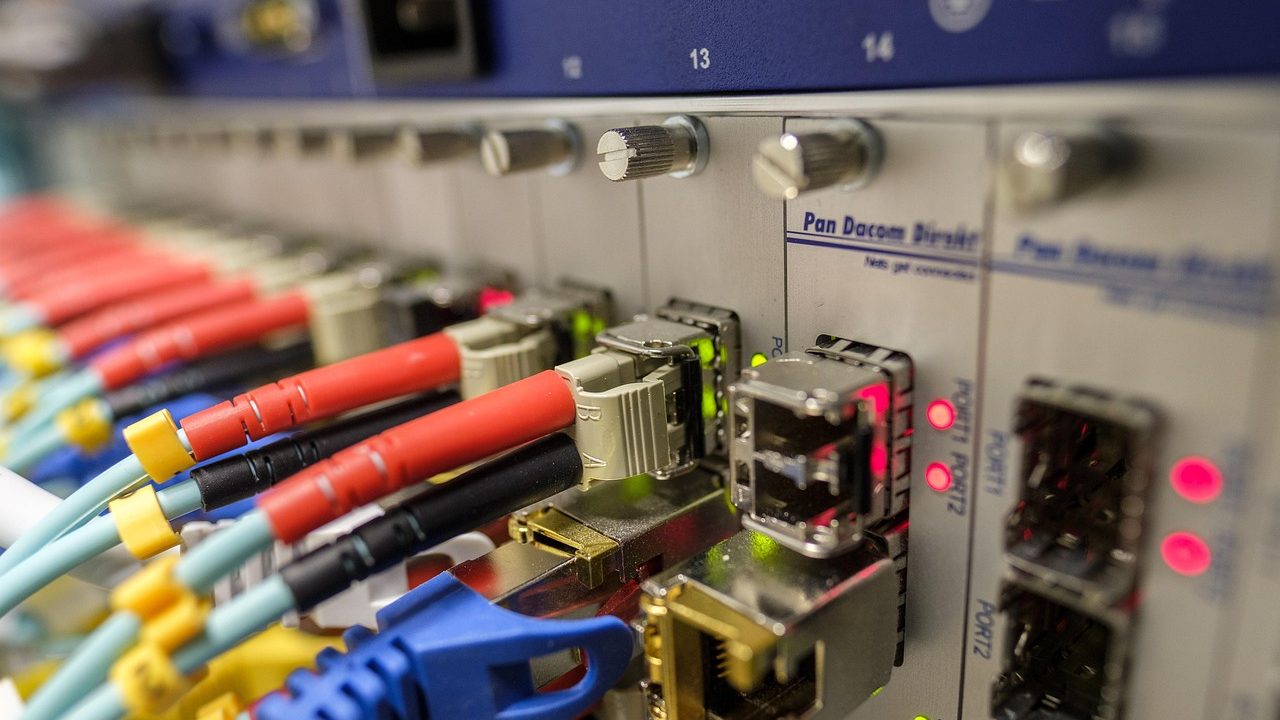
Google has officially reached 50 percent IPv6 adoption across its traffic, according to APNIC's blog — a milestone that has been decades in the making. IPv4, the original internet addressing system designed in the early 1980s, provided roughly 4.3 billion unique addresses. IPv6, its successor, offers 340 undecillion addresses, a figure so large it is effectively inexhaustible. The transition has nonetheless crawled forward for years, stalled by a classic economic coordination problem: ISPs saw no incentive to upgrade until major content providers supported IPv6, and content providers saw no incentive until ISPs did.
Google crossing the majority threshold shifts that calculus for network operators worldwide. Regional adoption, however, remains sharply uneven. Countries like Belgium and India reportedly exceed 70 percent IPv6 adoption, while large parts of Southeast Asia and Africa remain predominantly IPv4. The remaining bottleneck, according to observers in the Hacker News discussion, is residential ISP upgrade cycles rather than any technical barrier. Business networks, somewhat counterintuitively, tend to lag behind consumer networks because enterprise IT departments are more conservative about changes that could affect uptime.
There is also a performance dimension. IPv6 connections are often faster than their IPv4 equivalents — not because the protocol itself is inherently quicker, but because IPv6 traffic frequently takes more direct routes and eliminates the overhead of Network Address Translation, the workaround that has kept IPv4 viable long past its address-space limits. At scale, removing NAT layers produces measurable latency improvements.
Separately, a 2019 article titled 'Developers Don't Understand CORS' reached 226 points and 133 comments on Hacker News this week — remarkable longevity for a seven-year-old piece. CORS, or Cross-Origin Resource Sharing, is the browser mechanism controlling which web origins can make requests to which servers. The article's core argument is that most developers have the mental model inverted: CORS protects the user from malicious websites, enforced by the browser, not the server from malicious clients. The server merely declares its preferences. Comments from engineers with years of experience admitted they had held the wrong model for a long time, and the discussion attributed persistent confusion partly to browser error messages that fail to surface whether a preflight request failed, whether headers were wrong, or whether credentialed request handling was the culprit.
Six Years, 360 Patches: Linux Finally Buries a Dangerous String Function

After six years of sustained effort and 360 separate patches, the Linux kernel has officially removed the strncpy API. The C string-copying function has existed since the earliest days of the language and carries a subtle but dangerous flaw: when the source string is longer than the destination buffer, strncpy writes up to n bytes but does not guarantee null termination. Code that subsequently reads from that buffer can walk past the end of valid memory, a pattern that has produced buffer overflow vulnerabilities for decades.
The replacement function, strscpy, guarantees null termination and returns an error code when truncation occurs, making the dangerous case visible rather than silent. The coordination required to get there was extraordinary. The Linux kernel contains somewhere between 35 and 40 million lines of code, and systematically locating every strncpy call, understanding its context, writing a safe replacement, and shepherding each change through review across dozens of maintainers over six years represents an immense accumulation of unglamorous work.
One subtlety complicated the effort: some uses of strncpy were intentional. Certain binary data structures genuinely wanted a fixed-size field without null termination, and those cases required not mechanical substitution but actual reasoning about intent. Kernel developers in the Hacker News discussion noted that this kind of systematic cleanup is what distinguishes actively maintained infrastructure from legacy codebases that accumulate risk invisibly over time. Critics, however, raised the Rust-in-Linux project as a counterpoint — arguing that language-level memory safety guarantees may ultimately do more than any API hygiene campaign for the C code that remains.
Elsewhere in low-level systems, a comparison of epoll and io_uring drew attention on Hacker News. Epoll has powered event-driven network programming on Linux for roughly twenty years, letting programs monitor many file descriptors and receive notifications when any become ready. io_uring, introduced in Linux 5.1 in 2019, uses shared ring buffers between the kernel and user space so that the common path requires zero system calls, eliminating significant overhead in I/O-intensive applications. Benchmark results favored io_uring under high concurrency with many small I/O operations, though commenters noted that epoll's two decades of battle-hardening remains a practical argument for most production deployments. A separate post from zeux.io demonstrated AVX-512 SIMD optimization for zigzag decoding — processing 64 bytes simultaneously to accelerate deserialization of Protocol Buffer-encoded data — showing the full reasoning behind cases where compilers fail to auto-vectorize.
What iOS Apps Can Really See — and Who Controls What the Internet Runs On

A research app called Loupe, from mysk-research, was the highest-scoring story on Hacker News on Sunday with 326 points and 122 comments. The app demonstrates the range of device fingerprinting available to any iOS developer without accessing location, contacts, or any explicitly permission-gated data. Fingerprinting vectors Loupe exposes include system font lists, timezone combined with locale settings, device model inference from screen dimensions and performance characteristics, keyboard behavior timing, and installed app detection through URL scheme probing. Individually innocuous, these data points combine into an identity signal stable across app reinstalls and device resets.
The findings put pressure on Apple's privacy marketing, which centers on explicit permission flows. Apple's App Tracking Transparency framework, introduced in recent years, meaningfully disrupted advertising ecosystems by requiring apps to request tracking permission — but ATT addresses cross-app tracking via advertising identifiers. It does not address the fingerprinting vectors Loupe demonstrates, which require no permission at all because the underlying data has legitimate uses. mysk-research has previously documented how Apple's own apps transmitted data in ways not fully disclosed to users; the Loupe code is published on GitHub for independent verification.
SMPTE, the Society of Motion Picture and Television Engineers, announced that its entire standards library is now freely accessible — a significant shift for an organization whose specification documents previously cost hundreds of dollars each. SMPTE standards underpin professional video production and distribution, including SMPTE 2110 for IP-based live production, ST 2084 for high dynamic range video, and the timecode standards built into broadcast equipment globally. Free access lowers the barrier for smaller companies and developers in emerging markets who previously faced a choice between purchasing specifications and reverse-engineering behavior from reference implementations. Hacker News commenters noted the timing: the industry is in active transition toward IP-based production workflows, and the ST 2110 specifications are central to that shift.
Cloudflare announced temporary accounts for AI agents, drawing 218 points and 115 comments. When an AI agent needs to perform web interactions, it can be provisioned with a temporary Cloudflare account carrying scoped permissions and a limited lifespan; after the task completes, the account and any state it accumulated are destroyed. Cloudflare frames this as an infrastructure-layer solution to agent identity management, arguing that ephemeral accounts provide better security properties than persistent credentials because a compromised agent genuinely cannot accumulate access over time. Skeptics in the Hacker News thread noted that the harder problem for reliable AI agents is behavioral unpredictability — an agent with perfect credential hygiene can still take unexpected actions — though the infrastructure approach is credited with reducing the blast radius of agent errors.
UHF X11, a project implementing the X11 windowing protocol on visionOS for Apple Vision Pro, rounded out the segment. X11 has powered Unix and Linux desktops since 1987; the developer built a full X11 server that renders legacy applications into Apple's spatial computing environment. The Hacker News discussion split between those who see practical value for scientific and research software that will never be rewritten for modern platforms, and those who were primarily impressed by the engineering audacity of the project.
DOS Test Pilots Wanted: Retrocomputing, Path Separators, and an APL Game Engine

A developer identified as namgyaaal published a 3D voxel game engine written in APL — a programming language from the 1960s built around array operations and dense symbolic notation. Writing a game engine in APL is, as observers noted, the computational equivalent of carving a ship in a bottle. The project works, in part, because a voxel world is fundamentally a three-dimensional array of values, and APL's array slicing, mapping, and reduction operations express spatial queries concisely. APL practitioners in the Hacker News comments noted that the raymarching logic — determining what is visible from a given viewpoint — maps particularly well to APL's scan and reduction operators. The project drew 58 points and 7 comments, suggesting a small but appreciative audience.
The F-15 Strike Eagle II reverse-engineering project, which has been working to fully document the 1989 MicroProse flight simulation game, put out a call for DOS test pilots and received 259 points and 68 comments. The team needs people who can run the original DOS game and test specific flight maneuvers to help correlate what the disassembled code does with what the game actually displays. Developers of that generation were writing custom sound drivers, hand-optimizing inner loops, and building physics simulations with integer arithmetic because floating-point operations were too slow; understanding how they did it is, in the view of many Hacker News commenters, genuine computer science history rather than nostalgia.
A post documenting how Windows has changed its behavior when a user opens an unrecognized file type — tracing the UI from Windows 3.1's sparse dialogs through to modern Microsoft Store integration — drew a smaller audience but sharp commentary. The evolution from 'here's how to specify a program manually' to 'let us connect you to the app store' was read as a reflection of how Microsoft's revenue model has shifted: the old dialog was designed to solve a user problem, while the new dialog optimizes for platform engagement. A 2021 article on the historical divergence between the Unix forward slash and the DOS backslash as path separators also circulated, explaining the forty-year interoperability headache as the result of DOS having already claimed the forward slash for command-line option prefixes when it needed a path separator.
Slow Breathing, Information Overload, and a 15-Minute Lyme Test

A paper published in Neuron found that slow-paced breathing measurably modulates brain function and affects risk-taking behavior. Participants who practiced slow breathing showed reduced activity in the amygdala — the brain's threat-response center — and made more conservative risk assessments in controlled decision tasks. The researchers propose the mechanism runs through the vagus nerve, which connects the brainstem to major organs including the heart and lungs. Slow breathing increases heart rate variability, a signal associated with parasympathetic — rest-and-recover — nervous system activation. Hacker News commenters noted that the study provides a mechanistic explanation, via fMRI imaging and behavioral measures, for what breathing-based practices have claimed empirically for a long time.
A companion Science Daily piece summarized research suggesting the human nervous system has no effective adaptation for continuous exposure to global negative events. Human threat-detection evolved for local, immediate dangers that could be addressed behaviorally. When the danger is global, continuous, and unactionable, the same systems stay activated without resolution, producing chronic low-grade stress that researchers say degrades decision-making, empathy, and cognitive performance. The Hacker News discussion was notably self-aware: a community defined by its appetite for information grappled seriously with the cognitive costs of that appetite, with several commenters describing deliberate practices such as news fasts and time-limited reading.
A company has developed a 15-minute at-home test for Lyme disease detectable at the moment of tick removal. Current diagnosis relies on blood antibody tests that cannot detect early infection because antibodies take weeks to develop — by which time the disease may have progressed. The new test reportedly detects tick-specific proteins indicating a tick has been attached, enabling testing at the point of exposure. Lyme disease affects an estimated 476,000 Americans per year, according to the source; early antibiotic treatment is highly effective, while late-stage infection can produce chronic neurological and joint symptoms. Hacker News commenters noted the test still requires regulatory approval and raised questions about false negative rates — a negative result at removal does not rule out transmission if the tick was attached long enough.
The segment also touched on the antitrust context surrounding several of the day's infrastructure stories. The foundational U.S. law, the Sherman Act of 1890, prohibits monopolization — not monopoly itself. Courts distinguish between a dominant market position achieved through superior products and one maintained through exclusionary conduct. Modern tech cases hinge on defining the relevant market and evaluating whether conduct like Apple's App Store review process or Cloudflare's expanding platform role reflects legitimate product design or anticompetitive exclusion. The practical implication, as framed in the discussion, is that technical decisions made by companies with significant market power carry legal dimensions that purely engineering analysis does not capture.