AI Career Anxiety, Model Wars, and the Race for Performance: Tech's Most Urgent Debates
An anonymous developer's account of watching artificial intelligence erode a hard-won software career drew nearly a thousand responses on Hacker News Monday, crystallizing a moment of collective reckoning for an industry simultaneously dazzled and unsettled by its own creations.
How this was made Verified AI
Every Intellegix briefing is generated from that day's broadcast and run through automated checks before it publishes — with a human paged on any flag. Here is the trail for this edition.
Developers Confront an Existential Reckoning With AI

An anonymous post by a software engineer describing the systematic erosion of their career prospects by large language models became the most-discussed story on Hacker News Monday, drawing over 950 comments from developers around the world sharing what many described as a shared existential dread.
The original post was notable for its specificity and vulnerability, detailing how AI tools have gradually replaced skills the author spent years developing. Commenters offered concrete examples: GitHub Copilot reportedly completing entire functions correctly roughly 70 percent of the time in at least one developer's workflow, with AI now capable of generating code, debugging issues, and architecting solutions that previously required senior-level expertise.
The economic stakes are significant. Major technology companies have cited AI productivity gains amid recent rounds of layoffs, contributing to a market where experienced developers are competing for fewer positions. Junior roles are reportedly disappearing first, raising the question of how the next generation of engineers will acquire skills if entry-level work becomes automated.
The author subsequently engaged with the flood of responses, finding that many senior engineers pointed to historical parallels — the shift from assembly language to higher-level languages, the adoption of frameworks and IDEs — as evidence that the industry has absorbed technological transitions before. Others pushed back, arguing that current AI tools differ in scope: rather than automating tedious tasks and freeing developers for higher-level work, they are beginning to tackle that higher-level work directly.
The community's emerging career advice clustered around roles requiring human judgment, domain expertise, and stakeholder interaction — technical sales, project management, system design for complex organizational requirements. A competing view held that AI tools function as a skills multiplier, making elite engineers dramatically more productive while displacing those unable to adapt. Developers from lower-cost labor markets noted particular vulnerability, arguing that AI could undercut geographic cost arbitrage and disrupt traditional outsourcing models.
Chinese AI Challenges OpenAI as Tiny Models Offer a Different Vision

DeepSeek's V4 Pro model is reportedly outperforming GPT-5.5 Pro on precision tasks, marking what observers on Hacker News described as another milestone in an intensifying competition between Chinese and American artificial intelligence companies.
Precision — defined here as the ability to deliver accurate, consistent responses while avoiding hallucinations — is considered one of the most critical metrics for enterprise adoption. If DeepSeek can match or exceed Western models on this dimension at lower price points, as early indications reportedly suggest, analysts expect significant pressure on the pricing structure of the AI-as-a-service market. The development also carries geopolitical weight: advanced AI capabilities are increasingly viewed as strategic national assets, raising questions about the effectiveness of current technology export controls and governance frameworks.
Against that backdrop of trillion-parameter competition, a contrasting project attracted attention for a minimalist approach: a described 'tiny hackable CUDA language model implementation' fitting in a few hundred lines of code and designed to run on basic CUDA hardware. Proponents argued that comprehensible, modifiable implementations preserve insight into the fundamental mechanics that get obscured in enterprise AI systems.
A separate tutorial on building a perceptron from scratch drew similar interest, with commenters arguing that developers who understand the underlying mathematics of AI may be better positioned to work alongside these tools than those who treat them as black boxes. The educational thread connected directly to the broader career anxiety discussion: deep technical knowledge, the argument ran, becomes a differentiator precisely when surface-level coding tasks are automated away.
How Linear Made Speed a Competitive Moat

A detailed technical analysis of why Linear, the project management tool, feels dramatically faster than competitors such as Jira or Asana generated significant discussion Monday, with the author attributing the difference not to any single feature but to a set of architectural decisions the post termed 'perception engineering.'
Linear's implementation relies on optimistic updates — the interface responds to user actions instantly while server requests resolve asynchronously in the background — combined with aggressive data preloading, WebSocket-based real-time synchronization, and client-side state management that makes the application behave more like a native desktop program than a conventional web interface. When a user assigns a task, the UI reflects the change immediately; the network round-trip is invisible.
The analysis framed this performance as a durable competitive moat. Linear does not necessarily offer fundamentally different features from its rivals, but its speed has made it the preferred choice for many development teams — and replicating those advantages would require competitors to undertake significant architectural rebuilds. Predictable, consistent response times allow users to develop muscle memory, a psychological dimension of performance the author argued often matters more than raw speed benchmarks.
The discussion extended to a separate trending story about GCC's unidirectional rotation algorithm, an example of low-level compiler optimization that most application developers never encounter directly. Commenters noted that improvements accumulating at the systems level — in compilers, memory layouts, and hardware-software interaction — form the foundation that enables application-layer tools to achieve the kind of responsiveness Linear has made its signature.
The International Obfuscated C Code Contest winners, also announced Monday, offered a parallel lens on technical craft: entries reportedly include programs that generate their own source code, create visual art through character arrangements, and implement complex algorithms in extremely compact form — programming, in the community's framing, as a kind of performance art.
Rust, Zig, and the EU's Bet on Open Source Sovereignty
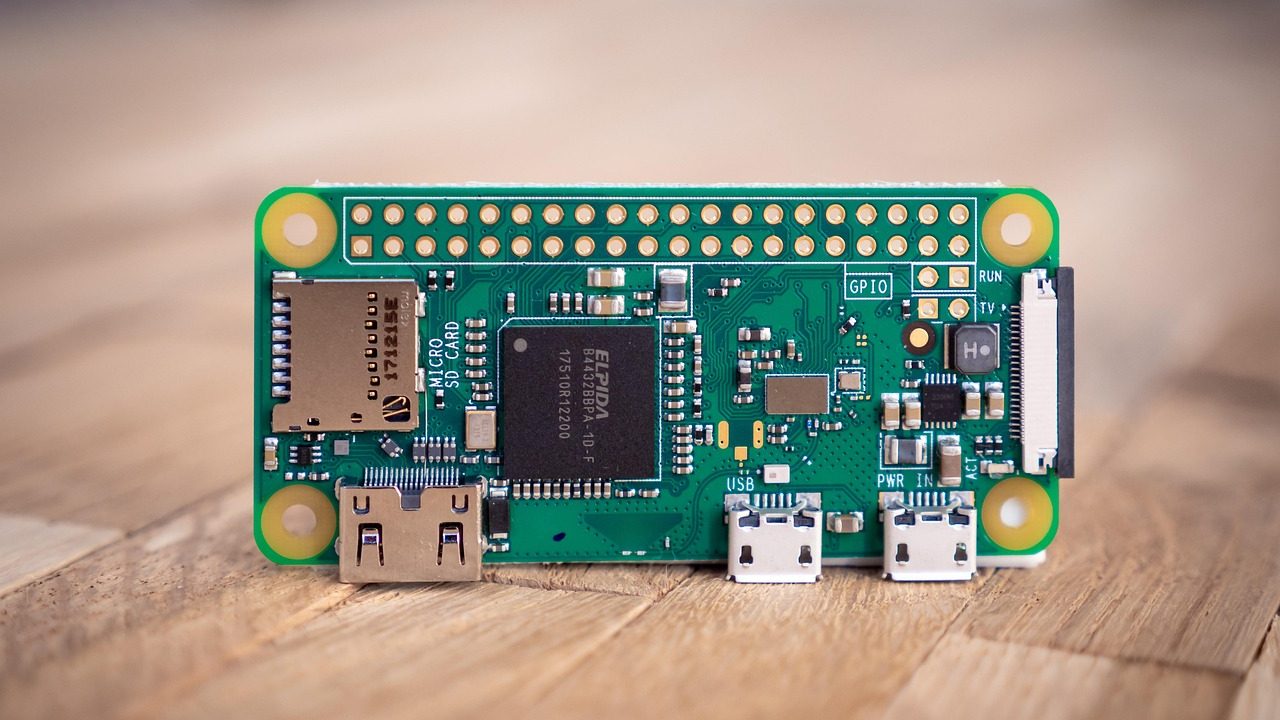
A developer published a working implementation of a Matter-protocol Wi-Fi light bulb written in Rust on the Raspberry Pi Pico 2 W, a project that drew attention less for the end product than for what it demonstrated: a complete, interoperable smart-home device built on entirely open source software running on hardware that costs under twenty dollars.
Matter, designed to create interoperability between smart-home devices from competing manufacturers, imposes demanding constraints on low-power microcontrollers. The implementation uses Embassy, an async runtime for Rust, to handle Wi-Fi connectivity, Matter protocol communication, and hardware control concurrently on a single-core chip without blocking operations. Commenters noted that Rust's memory-safety guarantees are particularly valuable in embedded contexts where debugging is difficult and failures can be costly.
Separately, a detailed explanation of Zig's 'structs of arrays' memory layout pattern attracted interest as an example of systems programming knowledge becoming more broadly accessible. The pattern optimizes memory access for certain data-processing workloads and was presented as illustrative of the kind of low-level technique that can determine whether performance is acceptable or exceptional.
At the policy level, the European Union released its new Open Source Strategy, framing open source adoption across government operations explicitly as a matter of technological sovereignty rather than cost savings alone. The strategy reportedly includes commitments to contribute back to open source projects, fund critical software infrastructure, and develop EU-based alternatives to key proprietary components.
The strategy's premise — that coordinated public investment can reduce dependence on non-EU proprietary platforms — drew scrutiny in the Hacker News discussion. Skeptics argued that dominant platforms derive competitive advantages not just from core functionality but from decades of integrations, third-party ecosystems, and user familiarity that are difficult to replicate through policy. Proponents countered that open source has already proven viable in critical infrastructure, citing Linux, Apache, and PostgreSQL, and that the relevant question is whether public investment can accelerate development where market incentives have been insufficient. Observers suggested the key signal to watch would be whether EU-funded projects attract substantial non-European adoption and contribution, or remain primarily regional initiatives.
Data Breach Delays Worsen as Privacy Tensions Mount

Troy Hunt, who operates the Have I Been Pwned data breach notification service, published an analysis concluding that after tracking more than 1,000 breaches, disclosure lag times are worsening rather than improving — companies are taking longer to inform users when their data has been compromised, even as regulatory frameworks such as GDPR and various state laws mandate notification timelines.
Hunt's analysis attributes the trend to a misalignment of incentives: reputational costs from disclosure are concentrated and immediate, while the benefits of timely notification — allowing users to change passwords, monitor accounts, or freeze credit — are diffuse and accrue primarily to those whose data was stolen. Enforcement, the analysis suggests, has been insufficient to overcome that calculus. Modern breaches compound the problem; sophisticated attack chains can persist undetected for months, meaning the window between compromise and disclosure may already be long before any organizational decision-making occurs.
Microsoft's OneDrive was separately reported to be implementing data expiry policies, a development commenters connected to broader economic pressures on cloud storage as data volumes grow. Automatic deletion policies, critics argued, alter the fundamental value proposition of cloud storage services and can create new forms of vendor lock-in if data migration options are not clearly provided.
A new report on age verification technologies added another dimension to the privacy discussion, arguing that systems designed to protect children online may paradoxically increase risk by creating new attack vectors for identity theft and by requiring minors to submit detailed personal information to access services. Effective age verification, the report suggested, requires either biometric data collection or integration with government identity systems — neither of which is clearly preferable from a privacy standpoint to the current absence of verification.
The Cypherpunk Library, a collection of cryptographic and privacy-focused resources trending on Hacker News, was cited as a counterpoint: a preservation of both the technical knowledge and the philosophical frameworks underlying early internet privacy advocacy, offered as context for developers entering a field increasingly shaped by tensions between individual rights, regulatory compliance, content moderation, and state surveillance.