AI Worms, Token Theft, and the Law Professor Test: A Day of Unsettling Technological Frontiers
From a one-click GitHub token-stealing exploit in VSCode to AI systems outscoring law professors in blind evaluations, June 3, 2026 delivered a cascade of security revelations and artificial-intelligence milestones that collectively signal how rapidly the boundaries of digital risk and machine capability are shifting.
“GitHub tokens can provide entry to private repositories, CI/CD pipelines, and deployment infrastructure, meaning a single compromised developer could potentially expose an entire organization's codebase.”
How this was made Verified AI
Every Intellegix briefing is generated from that day's broadcast and run through automated checks before it publishes — with a human paged on any flag. Here is the trail for this edition.
Speakers, Worms, and a Single Click: A Trio of Alarming Attack Vectors

Researcher Ammar Askar disclosed a vulnerability in VSCode's workspace trust system that allows a malicious repository to steal a developer's GitHub authentication token with a single click. Because developers routinely clone repositories and open them in VSCode, the social-engineering bar is minimal: send someone a link to an interesting project, they open it, and the attacker obtains their GitHub access. GitHub tokens can provide entry to private repositories, CI/CD pipelines, and deployment infrastructure, meaning a single compromised developer could potentially expose an entire organization's codebase.
A separate line of research demonstrated that PC speakers could be exploited to generate electromagnetic interference capable of affecting nearby circuits and potentially enabling data exfiltration or system manipulation — all without physical contact. The technique demands precise control over audio output and detailed knowledge of the target system's electromagnetic characteristics, but its implications for air-gapped systems and secure facilities are significant.
University of Toronto researchers added a third dimension to the day's threat landscape, demonstrating that AI systems could theoretically be weaponized to create self-propagating attacks targeting any connected device. The concept involves crafting AI inputs that cause systems to generate outputs designed to compromise other AI systems they interact with. Unlike traditional malware, which requires specific software vulnerabilities, such AI worms could potentially propagate across any AI system that processes the malicious input regardless of underlying implementation. The research remains theoretical, but it highlights how security models must evolve as AI systems become more interconnected and autonomous.
The regulatory response to these attack classes will be closely watched. Each vulnerability illustrates how a single compromised component — a developer's IDE, an AI model, or even a set of speakers — can cascade into far larger security incidents, raising the stakes for supply-chain oversight frameworks currently under development.
AI Outscores Lawyers and Alarms Mathematicians as Microsoft Enters the Coding Race

Microsoft launched MAI-Code-1-Flash, a new coding assistant that generated more than 200 comments on Hacker News. The 'Flash' branding signals an emphasis on speed and low latency for code completion and generation. Microsoft is integrating the tool with its Azure AI infrastructure, positioning Azure as a platform of choice for AI-powered development workflows — a strategy that places pressure on Google, Amazon, and emerging AI coding startups, while leveraging Microsoft's simultaneous ownership of both the VSCode development environment and its underlying cloud stack.
A Stanford Law study drew equally sharp attention by showing AI systems consistently outperforming law professors in legal analysis tasks. Evaluations were conducted blind, with neither evaluators nor test subjects knowing whether they were reviewing AI-generated or human-generated analyses; the AI won not by narrow margins but across multiple categories of legal reasoning. Senior attorney analysis is billed at hundreds of dollars per hour, and findings of this kind call into question the entire fee structure of legal services at the research and analytical tier.
Mathematicians issued their own warnings about AI's accelerating capabilities, expressing concern not merely about job displacement but about the fundamental nature of mathematical discovery and proof verification becoming automated. A particular anxiety centers on the black-box character of many AI systems: mathematical proof requires transparency and verifiability, and if AI generates insights that human researchers cannot fully understand or verify, it threatens the epistemic foundations of the discipline. Because mathematics underpins finance, engineering, and cryptography, systemic errors or adversarial manipulation in AI-driven mathematical work could carry consequences far beyond academia.
Taken together, the three developments paint a picture of AI capability advancing faster than the professional communities affected can fully assess. The Stanford study and the mathematicians' warnings share a common thread: the concern is not only whether AI can perform a task, but whether humanity retains the capacity to evaluate and build upon what those systems produce.
From Handwritten Clojure to a 1990 Racing Game: Developers Dig Into Niche Frontiers

A project called Edsger attracted attention for bringing a functional Clojure REPL to the reMarkable tablet, allowing developers to write and execute code by hand. Handwriting recognition for programming languages is considerably harder than for natural language, given precise syntax requirements, but Clojure's parenthetical structure provides clear delimiters that the recognition system can leverage. The project addresses a desire many developers have expressed for a more tactile coding experience and could help the reMarkable find a footing as a professional productivity device in specific technical communities.
Pluto.jl, a reactive notebook environment for the Julia programming language, reached version 1.0. Unlike traditional Jupyter notebooks, Pluto automatically updates cells when their dependencies change, addressing persistent reproducibility problems in data science workflows. The milestone is strategically timed as Julia continues to compete with Python for mindshare in scientific computing.
In a feat of digital archaeology, a developer reverse-engineered and recovered the world maps from Test Drive III, a 1990 DOS racing game. The process required working with custom file formats, obsolete compression schemes, and memory management techniques entirely foreign to modern development practice. Projects of this kind represent a form of cultural preservation, rescuing historical computing artifacts before they are permanently lost — though the work also raises unresolved questions about software preservation and copyright.
A first-month retrospective on Clojure by a newcomer also circulated widely. The author praised the language's functional programming model while flagging a steep learning curve and ecosystem complexity — an honest assessment that language communities often find more instructive than advocacy pieces, as it surfaces the concrete adoption barriers that insiders have long since forgotten.
GPU Memory as Swap, Portable ARM Assembly, and Robots That Breathe
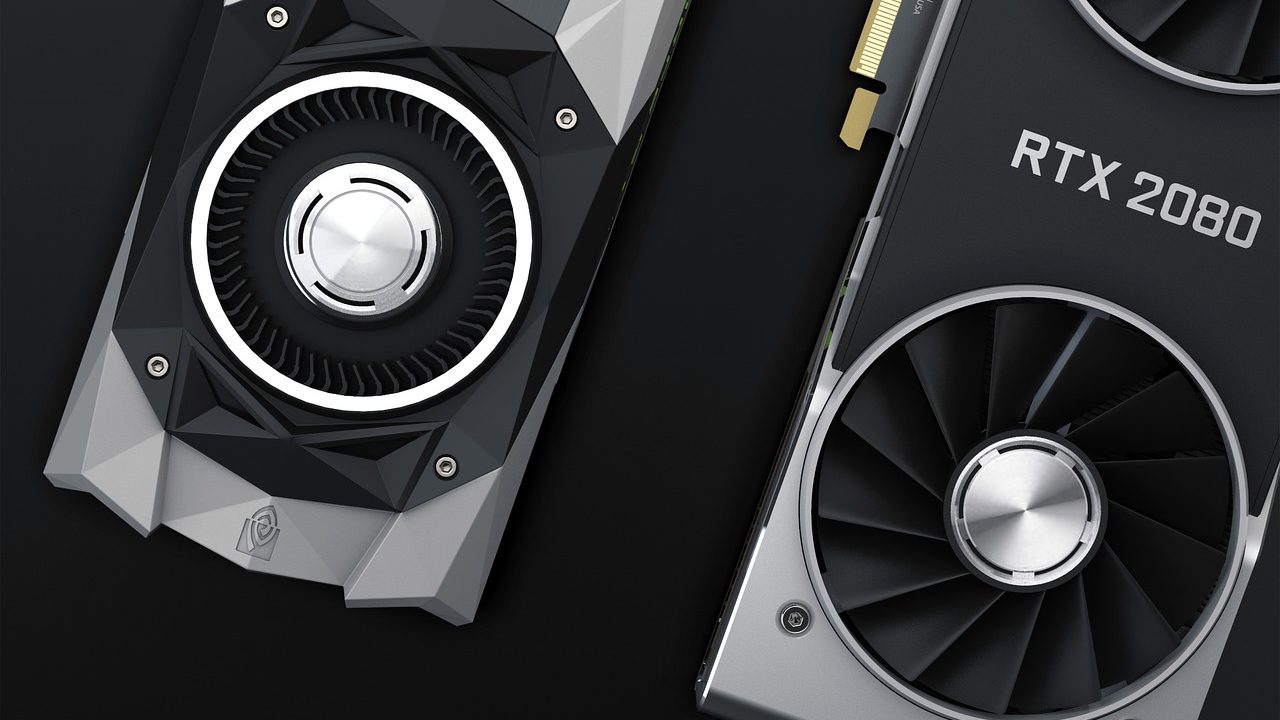
A project enabling NVIDIA GPU VRAM to serve as Linux swap space generated considerable technical discussion. The implementation uses network block device protocols to present GPU memory as a block device. While latency characteristics differ from system RAM, the approach is still substantially faster than storage-based swap and could extend the useful life of machines that are memory-constrained but GPU-rich — a profile common in machine-learning development environments.
Separately, discussion around portable ARM64 assembly programming reflected the broader shift in the processor landscape. Unlike x86, where Intel largely standardized the architecture, ARM licensees have considerable flexibility in their implementations, meaning pipeline depths, cache hierarchies, and instruction-scheduling characteristics vary meaningfully across chips. Apple's ARM-based processors, Amazon's Graviton line, and other server offerings mean developers can no longer assume x86 compatibility, making cross-implementation assembly knowledge increasingly relevant.
A pneumatic bipedal robot project drew interest for its biomimetic approach to locomotion, using air muscles rather than conventional electric motors. Pneumatic actuation more closely mimics biological muscle systems, producing softer and more compliant movement that could make robots safer and more practical in close proximity to people. The tradeoffs are real — pneumatic systems require compressed air sources, complex valve control, and more intricate stabilization algorithms — but the compliance and shock-absorption characteristics could prove decisive for robots intended for healthcare, eldercare, or domestic assistance, where rigid, motor-driven machines face significant adoption barriers.
Gmail Defections, BYD Engineering, and a Scaled-Back AI Executive Order

A personal account of abandoning Gmail — titled, in effect, a protest against the service treating users as incapable of managing their own experience — attracted more than 600 Hacker News comments. The author documented a series of interface decisions and feature removals that prompted a full migration away from Google's email ecosystem, including years of archived messages, contacts, and third-party integrations. The episode illustrates how platform switching costs function less as formal barriers than as friction-laden deterrents, a dynamic the European Union's Digital Markets Act explicitly targets.
A CT-scan teardown of BYD car parts circulated alongside the Gmail discussion, offering a detailed look at Chinese automotive engineering. The scans reportedly revealed that BYD achieves competitive pricing not through simplified designs or cheaper materials but through integrated engineering that reduces part counts and assembly complexity — an approach that challenges the assumption that lower-cost Chinese vehicles represent lower-quality engineering. The analysis carries policy weight as trade tensions shape decisions on tariffs, technology transfer, and competitive positioning.
President Trump signed an AI executive order that was described as significantly scaled back from earlier proposals following weeks of policy reversals. The final order is considerably more limited in scope than initial drafts. The repeated revisions create planning uncertainty for companies investing in AI capabilities, though one counterargument holds that the iterative process reflects evidence-based policymaking — initial proposals refined in response to input from technologists, economists, and civil liberties advocates — rather than simple indecision. Whether future AI policy announcements demonstrate similar refinement or shift toward more definitive, stable positions remains a key signal to watch.