$50 Million School Funding Freeze Squeezes Districts Before August Bell; Padres End Eight-Game Skid
How this was made Verified AI
Every Intellegix briefing is generated from that day's broadcast and run through automated checks before it publishes — with a human paged on any flag. Here is the trail for this edition.
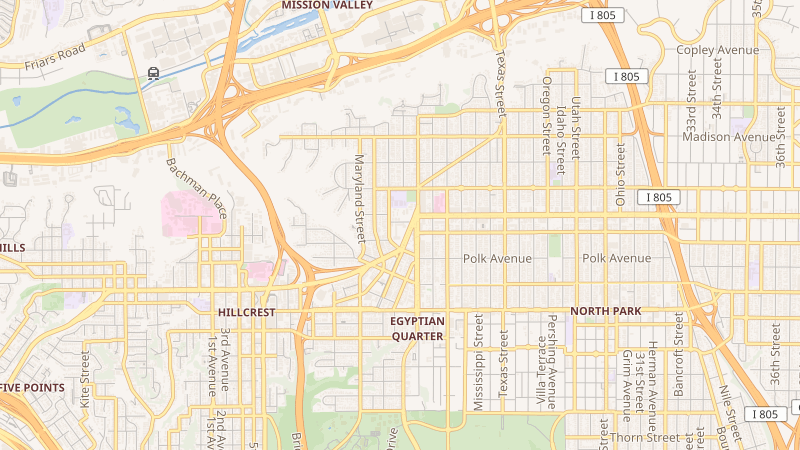
San Diego County school districts began July without roughly $50 million in federal K-12 grant funds that were due on July 1st. The Trump administration's Office of Management and Budget froze the grants under what it described as a 'programmatic review,' affecting Title I-C, Title II-A, Title III-A, Title IV-A, and Title IV-B programs — which fund English learner support, teacher professional development, before- and after-school programs, and migrant education.
San Diego Unified School District alone is waiting on approximately $13 million: $3.8 million for educator development, $2.6 million for English learner services, $3.1 million for enrichment programs, and $3.3 million for before- and after-school activities. Deputy Superintendent Nicole DeWitt confirmed the district is evaluating contingency plans — a compressed timeline given that the school year begins in August. The students most directly affected are among the county's most vulnerable: English learners, children from migrant families, and kids whose families depend on before- and after-school programs as essential daily infrastructure.
A parallel legal precedent exists but does not automatically apply. In July 2025, a federal court restored nearly $7 billion in frozen education grants nationwide. The 2026 freeze is a new administrative action not covered by that earlier order, and no judge has yet compelled the release of this cycle's funds. The critical signals to watch, according to those monitoring the situation, are federal court filings — not district press releases. If no restraining order or preliminary injunction is sought within the next two to three weeks, the probability of an extended freeze that reaches into the school year rises significantly. If California or San Diego districts appear as plaintiffs or intervenors in new litigation, it would suggest the legal pathway from 2025 is being replicated on a compressed timeline.
Districts do hold some short-term financial cushion, though most are operating deficits. A freeze resolved within 30 to 60 days by court order could produce administrative strain without forcing program cuts. A freeze that drags into September or October would force a harder choice: retroactively cut programs already running or absorb the cost from already-strained general funds. The $3.3 million before- and after-school line item at SDUSD is the sharpest watch point, given the number of families whose daily schedules depend on it.
On the sports front, the San Diego Padres snapped an eight-game losing streak — their longest since a 10-game slide in 2013 — with a 5-2 victory over the Los Angeles Dodgers at Dodger Stadium on Sunday, July 5th. JP Sears threw five scoreless innings of one-hit ball to earn the win and improve to 2-1. Manny Machado hit a three-run homer, and Jackson Merrill and Fernando Tatis Jr. each added RBI singles. The Padres, now 44-45 and third in the NL West, open a four-game home series against the Arizona Diamondbacks — also 44-45 and second in the division — tonight at Petco Park at 6:40 p.m., broadcasting on FS1, Padres.TV, and MLB.TV. The series carries genuine divisional implications. San Diego FC, meanwhile, remains on pause for the FIFA World Cup and returns to Snapdragon Stadium on Saturday, July 25th at 6:30 p.m. against FC Dallas for Star Wars Night.