Giant Trees, Ancient Galaxies, and the Vanishing Web
How this was made Verified AI
Every Intellegix briefing is generated from that day's broadcast and run through automated checks before it publishes — with a human paged on any flag. Here is the trail for this edition.
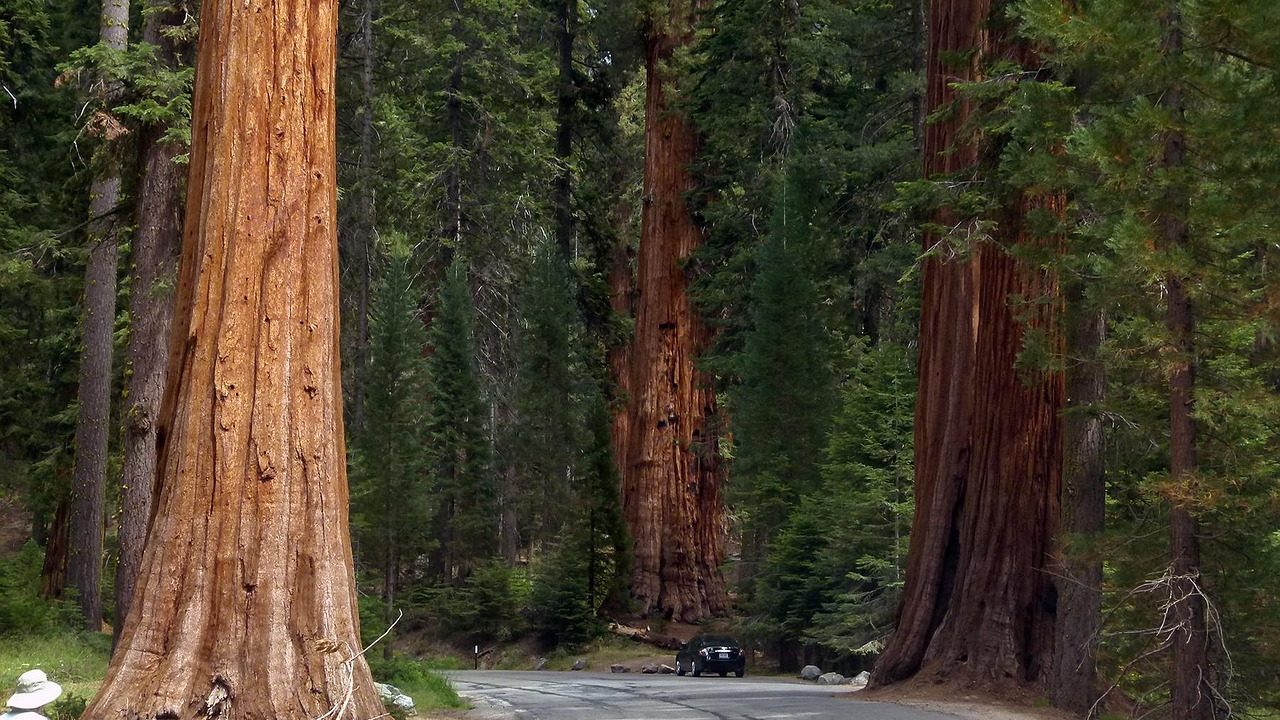
University of Exeter research on giant sequoias drew 212 points and 97 comments with a finding that upends assumptions about the hydraulic limits of tall trees. Using pressure measurement tools threaded into the vascular tissue of living sequoias reaching approximately 95 meters, researchers found that these trees do not operate near the edge of their hydraulic capacity as previously assumed — they pump water from root to canopy tip with a surprisingly large safety margin, having evolved hydraulic networks that are genuinely efficient at scale. HN commenters with engineering backgrounds explored whether tree vascular architecture could inspire approaches to microfluidic systems, while biologists in the thread noted that sample sizes are inherently small given the difficulty of instrumenting 95-meter trees.
A Quanta Magazine piece on James Webb Space Telescope observations of the early universe was among the more humbling scientific stories of the day. Webb has detected massive, fully-formed galaxies at redshifts corresponding to just a few hundred million years after the Big Bang — galaxies that, according to standard cosmological models, should not yet exist. The observations have been replicated across multiple Webb observing programs and confirmed by independent teams. The scientific response is measured: leading explanations range from refinements to models of early galaxy formation to more fundamental questions about the universe's initial conditions. No one is questioning the Big Bang, but the timeline of structure formation may require substantial revision.
History surfaced in a piece about Jan and Nicolaes van der Heyden, who developed Amsterdam's first practical fire hose system in the 1670s — flexible leather hoses with threaded couplings drawing from canal water, replacing bucket brigades and the practice of demolishing neighboring buildings to create firebreaks. Crucially, the brothers obtained a monopoly contract from Amsterdam's city government to operate the system, train crews, and maintain equipment — arguably the earliest documented municipal service contract for emergency response. Amsterdam's fire mortality rates dropped dramatically within a decade of adoption.
The Internet Archive's ongoing effort to recover dead web pages added a sobering data point: roughly 38 percent of web pages that existed in 2013 are no longer accessible at their original URL — a decade of record-keeping, gone. The HN thread became a discussion about whether there is a public obligation to maintain access to web content the way physical libraries preserve books, with commenters noting the asymmetry: a book that falls out of print still exists somewhere in a library system, while a vanished web page leaves almost no trace unless someone specifically archived it before it disappeared.