Apple Bets on AI Silicon, IBM Reaches the Edge of Physics, and USB-C's Hidden Depths
How this was made Verified AI
Every Intellegix briefing is generated from that day's broadcast and run through automated checks before it publishes — with a human paged on any flag. Here is the trail for this edition.
Apple this week raised prices on MacBooks and iPads, with Reuters attributing the increases to skyrocketing memory costs — a consequence of supply constraints in a DRAM market dominated by Samsung, SK Hynix, and Micron. The price hike generated 1,065 Hacker News comments, the most of any story this week, with longtime Apple customers articulating a feeling that the value proposition has shifted: premium prices now increasingly assume the buyer wants to use Apple's AI services.
The more strategically significant announcement, reported by Bloomberg, is that Apple is skipping the high-end M6 chip variants entirely — no M6 Pro, M6 Max, or M6 Ultra — and jumping straight to an M7 line designed specifically around AI workloads. The M7 is expected to carry substantially more dedicated neural engine capacity and on-device inference bandwidth, positioning Apple to run more sophisticated AI models locally and without cloud dependency before the next major device cycle. The move is a direct response to competitive pressure from Qualcomm's Snapdragon X Elite, which has made significant inroads in the Windows laptop market on AI benchmark performance. The 275-comment HN discussion centered on the distinction between AI accelerators built for inference — running existing models — versus those built for training, with Apple's consumer-device strategy firmly in the inference camp.
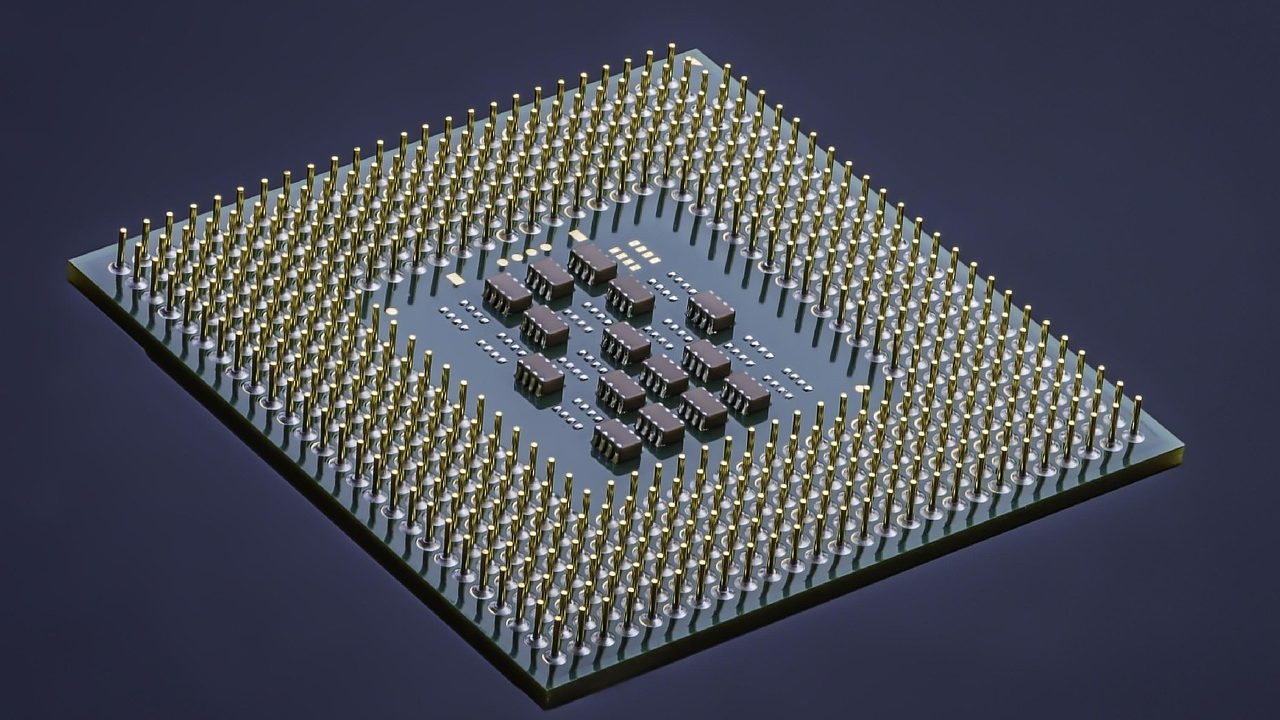
IBM, meanwhile, announced what it is calling the world's first sub-1 nanometer chip technology. At those dimensions, 'nanometer' is an abstraction rather than a literal physical measurement, but the underlying physics is real: at sub-nanometer gate lengths, quantum tunneling effects become dominant, with electrons passing through barriers they classically should not be able to cross, creating leakage current and heat dissipation problems that do not exist at larger scales. The IBM announcement implies the company has found a way to manage these effects, possibly through new gate dielectric materials or novel transistor geometries. The 175 HN comments were technically substantive and appropriately skeptical, noting that the research paper details will matter enormously before headline claims can be evaluated. The announcement also lands against the backdrop of intense competition in semiconductor manufacturing, where any genuine advancement in domestic chip process capability carries strategic implications beyond any product roadmap.
Framework's 10-gigabit Ethernet expansion module provided the week's most technically illuminating hardware story, via a writeup by Jeff Geerling. The piece is effectively a guided tour through USB-C's specification complexity: the connector is not merely a physical shape but a protocol negotiation framework capable of carrying USB data, DisplayPort, Thunderbolt, HDMI, power delivery, and now 10-gigabit Ethernet over the same pins. Getting 10Gbps Ethernet to work reliably requires the host controller, cable, module firmware, and operating system drivers to agree on protocol mode at gigahertz frequencies without interference from everything else sharing the connector. Contributors to the 100-comment HN thread who work in USB-C certification and driver development noted consistently that the specification's flexibility is also its principal liability: the more tasks USB-C can perform, the larger the surface area for implementation bugs and compatibility failures.
Oxide Computer, the infrastructure company co-founded by Bryan Cantrill, published a 3D virtual tour of its rack architecture this week, drawing 155 HN comments that were enthusiastic about the hardware transparency. Oxide publishes its designs in ways most server hardware companies do not, consistent with its stated commitment to making the full stack legible to customers and the broader engineering community.