Mercedes Cracks the Axial Flux Motor Problem — and Hardware Regains Its Moment
How this was made Verified AI
Every Intellegix briefing is generated from that day's broadcast and run through automated checks before it publishes — with a human paged on any flag. Here is the trail for this edition.
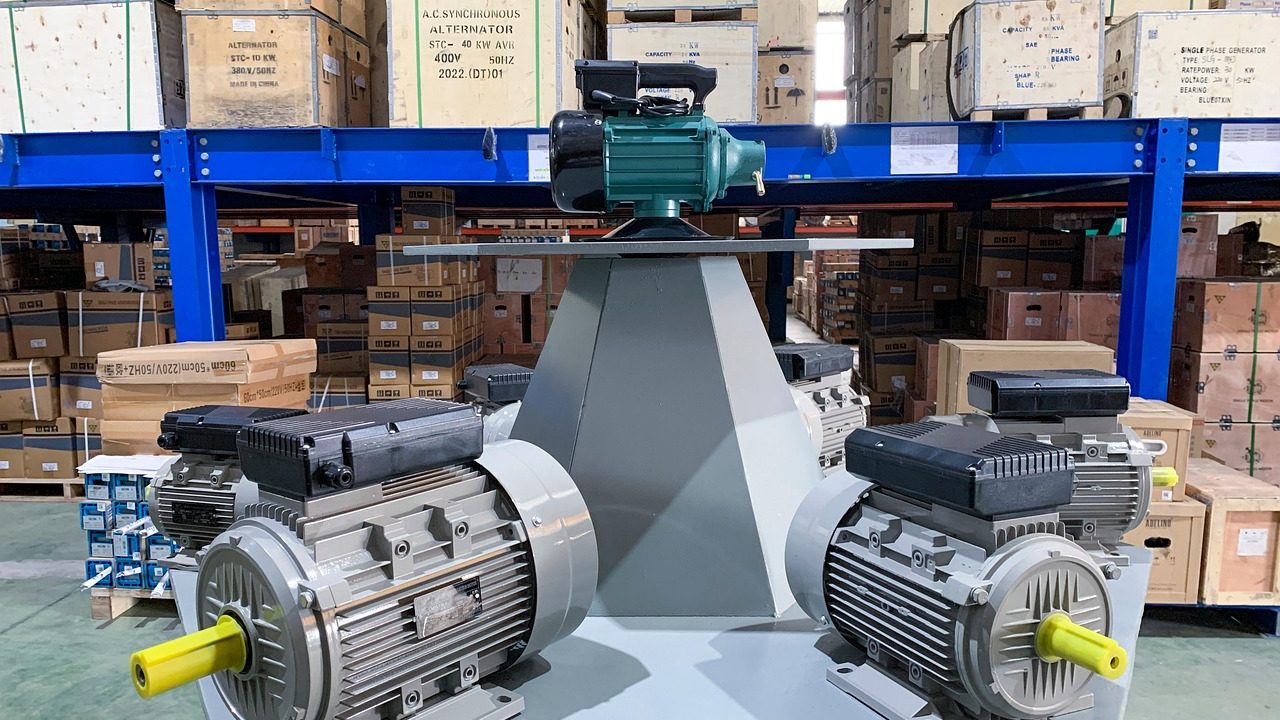
Mercedes-Benz announced it will begin large-scale production of electric axial flux motors, a development that attracted 143 upvotes and 62 comments. Axial flux motors, which generate magnetic fields along the axis of rotation rather than radiating outward from the center, have long been understood in academic circles to offer superior power density. Mercedes claims its implementation delivers 20% more power density than conventional designs while reducing weight by 30% — but the real achievement, the company indicated, is solving the precision manufacturing and quality control challenges that had previously blocked mass production.
The performance advantages compound at the system level: higher power density motors can either shrink battery packs for equivalent range or extend range significantly with existing battery technology, while the weight reduction improves handling and efficiency simultaneously. Skeptics in the discussion noted that manufacturing yield rates and total cost of ownership remain the decisive variables — if quality control proves expensive at scale, software optimization of conventional radial flux motors might deliver most of the benefit at a fraction of the complexity.
A separate story on ultrafast machine learning using Kolmogorov-Arnold Networks on FPGAs, which drew 235 upvotes, illuminated a convergent trend in hardware-accelerated computing. Kolmogorov-Arnold Networks replace the traditional multilayer perceptron structure with learnable activation functions; on FPGAs, which can be configured for the specific mathematical operations a given network requires, the approach can achieve substantially better performance-per-watt than conventional neural networks — a property with direct relevance to autonomous vehicle systems where real-time processing under power constraints is critical.
A blog post arguing that software hackathons have been displaced by hardware hackathons — 'RIP software hackathons. Long live the hardware hackathon' — drew 192 upvotes and 92 comments. The core argument is that software hackathons now tend to produce variations on existing frameworks and APIs, while hardware hackathons force participants to engage directly with physical constraints: power budgets, thermal management, signal integrity, and manufacturability. The result, proponents contend, drives more fundamental problem-solving.
Taken together, the axial flux motor breakthrough, FPGA-accelerated AI, and the cultural tilt toward hardware-focused development suggest an emerging consensus that the next wave of meaningful performance improvements requires rethinking underlying physical architectures rather than continuing to optimize within existing software abstractions.