Cold Case Arrest, $9.16B Budget, and Fire Warnings: San Diego's Consequential Friday
A 27-year-old murder case cracked open Thursday with the arraignment of a Georgia prison inmate, while the San Diego County Board of Supervisors wrapped a single session that reshaped the region's fiscal and social policy landscape.
How this was made Verified AI
Every Intellegix briefing is generated from that day's broadcast and run through automated checks before it publishes — with a human paged on any flag. Here is the trail for this edition.
After 27 Years, an Arrest in the Balboa Park Strangulation of Diane Ayres

Christopher Creek, 52, was arraigned Thursday on homicide charges in the 1999 murder of Diane Ayres, a 23-year-old woman whose strangled body was found in bushes along the 1800 block of Golf Course Drive in Balboa Park. The arrest closes a cold case that had gone unsolved for nearly three decades — one that now stands as a marker of how dramatically forensic capabilities have shifted since the late 1990s.
Creek was not found locally. He was already incarcerated at Dodge State Prison in Chester, Georgia, serving time on an unrelated offense when San Diego detectives reopened and reexamined the forensic record. SDPD's cold case unit coordinated with the FBI, the District Attorney's office, and the Laurens County Sheriff's Department in rural Georgia, which executed the arrest on a San Diego homicide warrant on June 16. Creek was extradited and arrived back in California by Tuesday before his Thursday arraignment.
The precise forensic tools that proved determinative in the case have not been specified in public reporting, but the trajectory is consistent with a broader national pattern: departments reopening cases from the late 1990s and early 2000s, when DNA technology and touch-DNA analysis were considerably more limited than they are today. Diane Ayres would have been 50 years old now. The arraignment marks the beginning of the legal process, not its conclusion.
San Diego's cold case apparatus has been visibly active in recent years. The Dwight William Rhone case — involving murders stretching back to 1993 — reflects the same sustained pressure the DA's office and SDPD have applied to older unsolved homicides. For the Ayres family, the arrest represents the end of a 27-year wait with no answer.
Hillcrest Hate Crime Suspects Caught in Under Three Hours — Plate Readers Did the Work

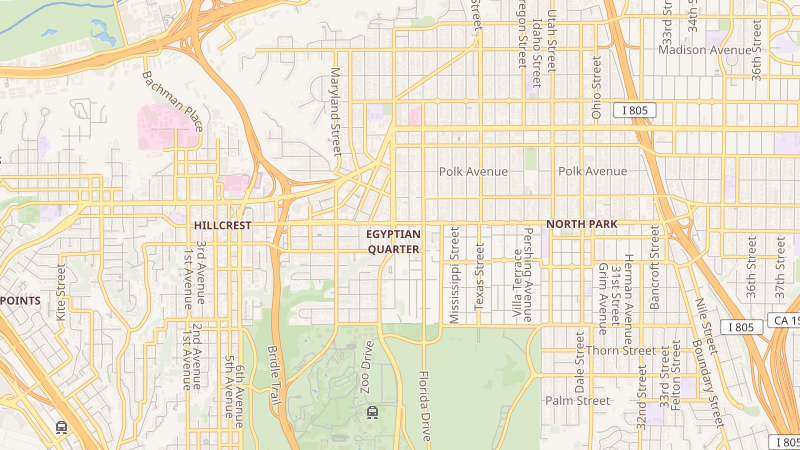
Four people — one juvenile and three adults — have been booked in connection with a hate crime targeting LGBTQ+ patrons and businesses along University Avenue in Hillcrest in the early hours of June 21. Suspects traveling in a gray Toyota Tacoma drove through the 1000 to 1200 block and threw eggs at customers and security guards outside multiple bars and restaurants, striking three people and hitting two businesses directly.
Officers charged those involved with Violating Civil Rights by Threat or Force, Conspiracy to Commit a Misdemeanor, and Battery. Under California law, targeting individuals on the basis of sexual orientation elevates the offense. The speed of the apprehension drew attention: using surveillance footage and the department's Automated License Plate Recognition system, officers located the vehicle at 3:35 a.m. near 2500 Garnet Avenue in Pacific Beach — less than three hours after the attack occurred.
The case arrives at a moment when ALPR technology is itself under active civic debate. Santee's City Council has been weighing a six-camera ALPR pilot, with that vote still pending. Proponents of such systems routinely cite exactly this type of scenario — a plate captured on camera, cross-referenced in real time, leading to a rapid arrest in a bias-motivated crime. Critics maintain that the civil liberties implications of mass plate-scanning warrant careful oversight.
In a separate maritime enforcement action, a Coast Guard crew intercepted a vessel off La Jolla this week and detained 26 people, including 24 adults and two unaccompanied children. Public reporting does not include further details about the vessel or its operator. The presence of two unaccompanied minors on an open-water crossing raises child welfare considerations alongside the immigration dimensions of the case.
Supervisors Pass $9.16B Budget — and Two More Major Policies in a Single Session
The San Diego County Board of Supervisors emerged from its Thursday session having formally enacted three consequential measures: the adoption of the $9.16 billion Fiscal Year 2026-27 budget, the creation of an emergency food distribution program for residents at risk of losing CalFresh benefits, and the pursuit of $20 million in state housing funds for a Chula Vista veterans' project. The budget — a $522 million, or 6.1 percent, increase over the current year — takes legal effect July 1.
The emergency food program was passed in direct response to new federal work and community engagement requirements for CalFresh, California's version of the federal SNAP program, which took effect June 1. The County estimates approximately 93,500 San Diego residents face the loss of or significant reductions in those benefits under the new rules. The Board's program is designed as a bridge for those who fall through the federal net — people who cannot satisfy the documentation or work-activity requirements, whether because of disability, caregiving burdens, or other barriers.
The third vote authorized the County to seek $20 million in state Homekey+ funding for Paseo del Rey, a proposed 96-unit affordable housing development in Chula Vista that would serve veterans and individuals experiencing homelessness connected to mental health or substance use challenges. The County's partner on the project is Wakeland Housing and Development Corporation. If the state approves the application, Paseo del Rey would become the County's second Homekey+ project in Chula Vista, following the 27-unit Palomar Motel conversion that broke ground in January. The funding has not yet been awarded.
Two financial deadlines loom for county residents in the coming days. The City of San Diego's transition from black to gray trash bins becomes permanent on July 1 — five days away. The city has delivered 259,000 gray bins to 224,000 households; residents who still need assistance can visit WastePortal.sandiego.gov or call 858-694-7000. Monthly rates adjust slightly, with the 95-gallon bin rising from $43.60 to $44.57. Separately, County Treasurer-Tax Collector Larry Cohen is warning that unpaid 2025-26 property taxes must be paid by Tuesday, June 30, or owners will face a $33 redemption fee plus 1.5 percent interest per month — an 18 percent annual rate.
County Sues Sushi Franchise Operators Over Wage Theft Disguised as Franchise Contracts

San Diego County's Office of Labor Standards and Enforcement filed a lawsuit this week that officials are describing as the county's first major labor enforcement action of its kind, targeting five companies that operate branded sushi counters inside grocery stores. Named defendants include Ace Sushi Franchise Corp., Asiana Management Group, Advanced Fresh Concepts Franchise Corp. and its parent company, and FujiSan Franchising, which operates under the Fuji Food Products brand.
The legal theory at the core of the suit is the alleged misuse of the franchise classification. Workers were reportedly designated as 'independent contractor franchisees' — nominally their own business owners — while the companies allegedly dictated their schedules, required many to work seven days a week for 50 to 70 or more hours, denied them breaks, and deducted costs for equipment, ingredients, and spoilage directly from their pay. The result, the County alleges, was take-home wages below the legal minimum. Supervisor Paloma Aguirre described it as 'a deeply troubling scheme that exploited workers.'
The County is seeking unpaid wages, liquidated damages, civil penalties, and restitution. If the suit succeeds, it could set a significant precedent for how franchise structures in food retail are examined under California labor law — particularly given that Advanced Fresh Concepts operates sushi counters at grocery stores across California and potentially beyond.
On the housing market front, the Greater San Diego Association of Realtors reported that the countywide median sales price for all residential properties held flat at $900,000 in May. The single-family detached median remained at $1,099,500 and attached homes at $675,000. SDAR President Karen Van Ness described conditions as 'a holding pattern.' Inventory is down 12.4 percent year-over-year — technically still a seller's market — but with mortgage rates sitting in the mid-6 percent range, sellers who overprice their listings are finding fewer takers. The market has effectively held at the $900,000 level for roughly a year.
Santee Sends a Bolder Sales Tax to November Ballot — After Voters Already Said No
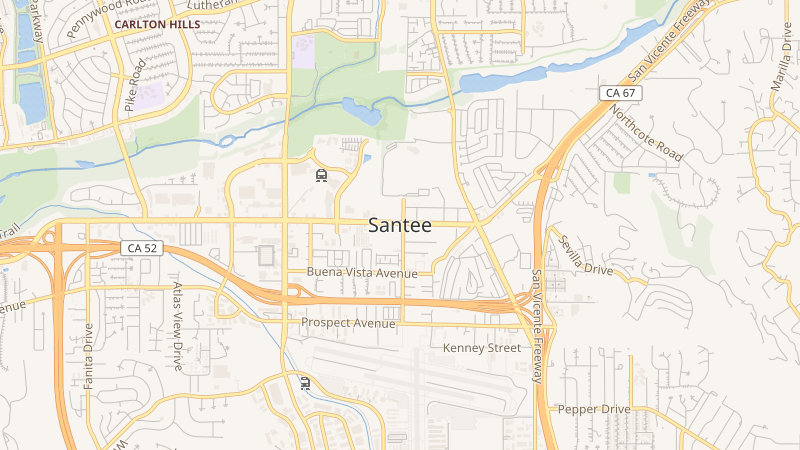
The Santee City Council voted Wednesday night to place a temporary one-percent general transactions and use tax on the November 3rd General Municipal Election ballot. If approved by voters, the revenue would fund pothole and road repairs, storm drain upgrades, improved fire protection and emergency response, and park and public facility maintenance. The city has identified $322.9 million in unfunded infrastructure needs and is framing the measure as a 10-year temporary levy, with groceries, prescription medicine, and other essential goods exempt.
The political backdrop makes the ask notable. Santee voters rejected Measure S — a half-cent sales tax — in November 2024. The Council is now returning with a full cent instead. Councilmember Rob McNelli raised a substantive objection during earlier discussions, arguing that a general sales tax carries no binding legal guarantee that proceeds will be spent as promised to voters, unlike a special tax, which is restricted by law. That general-versus-special-tax distinction is likely to anchor the November campaign on both sides.
Neighboring El Cajon's City Council approved its own FY 2026-27 operating budget the same night, but council leadership accompanied the vote with a public warning that difficult financial decisions remain ahead. The city is delaying certain capital projects to avoid drawing down reserves while maintaining current service levels. El Cajon did not release a full budget figure publicly.
East County gardeners and homeowners face a more immediate concern: California's Department of Food and Agriculture declared a new quarantine zone on June 22 covering a 76-square-mile regulated area centered on Spring Valley, bounded by El Cajon to the north, Proctor Valley to the south, Lemon Grove to the west, and McGinty Mountain to the east. The trigger was the detection of a mated female Mexican fruit fly, which signals a potential breeding population. State officials plan to release up to 250,000 sterile male flies per square mile per week within a 50-square-mile eradication radius, and properties within 200 meters of detections are being treated with Spinosad, an organic pesticide. Residents inside the quarantine zone are prohibited from transporting homegrown produce off their property. The quarantine boundary stops at El Cajon to the north, placing it within a few miles of Santee's southern edge but leaving Santee proper outside the current zone. The state Pest Hotline is 1-800-491-1899.
On a lighter note for Friday evening, Santee Lakes is hosting its second Summer Night Fishing event of the year from 5 p.m. to 11:30 p.m. — adults pay $10, with reduced rates for juniors and seniors, and no California state fishing license is required. The San Diego Astronomy Association is also hosting a free public Star Party tonight at Sycamore Canyon/Goodan Ranch Preserve from 7 to 10 p.m. as part of the County Parks' Parks After Dark program, with telescopes on site and no registration required.
School Board Votes Unanimously to Restrict Devices — and the Hard Questions Start Now

San Diego Unified's Board of Education voted unanimously on June 23 to restrict gaming and video-streaming platforms on all district-issued laptops beginning August 10, the first day of the 2026-27 school year. The resolution also removes electronic device carts from transitional kindergarten classrooms. Exceptions are built in for students with Individualized Education Programs whose documented needs require device access.
Board President Richard Barrera and Trustee Shana Hazan led the effort. The unanimity of the vote signals broad institutional consensus, but the resolution is explicitly a first step. A new committee is to be formed by winter break to develop grade-level screen-time guidelines, and the district is required to produce AI governance policies by the end of the 2026-27 school year. The August restrictions are the visible leading edge of what is framed as a multi-year restructuring of how the district approaches technology in the classroom.
Research linking non-instructional device use — particularly social media and passive video consumption — to reduced academic performance and elevated adolescent anxiety has accumulated steadily in recent years. The implementation challenge, however, is real. San Diego Unified students, like students everywhere, carry personal phones. A laptop-level block on YouTube and gaming platforms does not prevent a student from accessing the same content on a personal device under a desk, and much of the research cited by advocates for such policies involved settings where personal devices were also restricted.
There are also equity and granularity concerns. A blanket block on video streaming does not distinguish between a student watching gaming clips and one using YouTube to access instructional content in a subject where district resources are thin. The committee forming by winter break will need to address that specificity. A June 12 analysis found that every major school district in San Diego County is running a deficit for 2025-26, with layoffs, compensation reductions, and campus closures already underway — the structural backdrop against which the district is implementing a technology reform that will require its own monitoring and compliance infrastructure.
The San Diego County Board of Education separately passed a resolution honoring the three victims of the May 18 Islamic Center shooting — Amin Abdullah, Nadir Awad, and Mansour Kaziha — and formally condemning Islamophobia and anti-Muslim violence. Amin Abdullah, a father of eight, has been credited with triggering a lockdown that protected more than 100 children in the attached school. The FBI's investigation continues as a hate crime inquiry; no new charges or indictments have been announced. On the community support front, the San Diego County Office of Education and San Diego County Credit Union launched their 12th annual Stuff the Bus school supply drive on June 22, running through July 31, to benefit students experiencing homelessness across the county.
In sports, the Padres enter Friday at 42-37 on the back of a three-game sweep of the NL East-leading Atlanta Braves, capped by a 5-2 win Wednesday before 40,183 fans. JP Sears earned the win in his season debut; Ty France hit his ninth home run of the year. San Diego now hosts the Los Angeles Dodgers, who sit at 52-29 with a 10-game division lead. First pitch at Petco Park is 6:45 p.m. on Apple TV+. And at Naval Base Coronado, Cory Heim won the Anduril 250 in what was billed as the first NASCAR points race ever held on an active military installation — a 16-turn, 3.4-mile circuit built on the base with the USS Carl Vinson as a backdrop.
Wind, Fire Risk, and a Weekend Worth Planning Around
Coastal and inland San Diego faces a mild, marine-influenced Friday: cloudy through mid-morning giving way to gradual clearing, a high near 72 degrees, and west winds of 5 to 10 miles per hour. A 5 percent rain chance is in play, and Friday night remains mostly cloudy with a low around 62 and calm overnight winds. Saturday looks similar along the coast, with west-southwest winds gusting to 20 miles per hour by evening and a 25 percent chance of patchy rain tied to a deeper marine layer.
The south swell continues through Friday evening, generating surf of 3 to 6 feet with the highest waves on south-facing beaches. A Beach Hazards Statement is in effect through tonight; rip currents are a genuine concern, and swimmers are urged to stay near a lifeguard.
The desert and mountain communities are facing a materially different and more serious picture. A Wind Advisory is active through Saturday for desert areas, with gusts of 30 to 50 miles per hour and up to 65 miles per hour through mountain passes. Relative humidity in the deserts is dropping to around 10 percent. The National Weather Service is describing the combination as 'near-critical fire weather conditions' — language that is not used casually. Residents in El Centro, Borrego Springs, Jacumba, and the mountain pass communities are urged to take ignition source precautions seriously through the weekend.
For those looking for things to do: the San Diego County Fair runs through July 5 at the Del Mar Fairgrounds, daily except Mondays and Tuesdays, from 11 a.m. to 11 p.m. Tonight's Grandstand headliner is Maren Morris at 7:30 p.m., with separate tickets starting at $66. Free with fair admission, the Paddock Stage hosts Don Carlos, Israel Vibration, Roots Radics, and Pato Banton at 6 p.m., and the 20th Annual Gospel Day at the Fair begins at 11 a.m. Looking ahead to July 4th, the Big Bay Boom launches from four barges across San Diego Bay at 9:15 p.m., a synchronized 500-drone show flies over La Jolla Cove at 8:45 p.m. at Kellogg Park, and the San Diego Symphony performs at the Rady Shell at Jacobs Park beginning at 7:30 p.m. The Old-Fashioned 4th at Old Town San Diego State Historic Park runs 11 a.m. to 3 p.m. and is free.