Gulf Missiles, a Mystery Leader, and a Senate in Mourning: The World on July 12, 2026
Iranian missiles struck American allies across the Persian Gulf on Saturday, a masked figure appeared at the burial of Supreme Leader Khamenei, and Washington absorbed the death of Senator Lindsey Graham — all before Sunday morning.

“When the counterpart for negotiation or deterrence is unclear, military escalation becomes harder to calibrate.”
How this was made Verified AI
Every Intellegix briefing is generated from that day's broadcast and run through automated checks before it publishes — with a human paged on any flag. Here is the trail for this edition.
A Day of Simultaneous Crises

The morning of Sunday, July 12, 2026 arrived with the Persian Gulf under fire, the U.S. Senate mourning one of its longest-serving members, and artificial intelligence companies fighting a two-front battle against both the Pentagon and Chinese disinformation campaigns. Rarely does a single news cycle demand attention on so many fronts at once.
The day's stories span Iranian missile strikes on Qatar, Bahrain, and the United Arab Emirates; Russia's overnight barrage across Ukraine killing multiple people; the death of Senator Lindsey Graham at 71; a Cambridge University study documenting Boko Haram's use of ChatGPT to design explosives; Goldman Sachs forecasting AI could add half a percentage point to U.S. inflation; wildfires burning across vast stretches of Colorado and Utah; and a heat dome forecast to blanket most of the country next week.
Each story carries its own weight. Together, they describe a world in which multiple crises are compounding simultaneously, with no obvious sequence of resolution.
Gulf on Edge: Iran Strikes U.S. Allies and a Leadership Vacuum Deepens
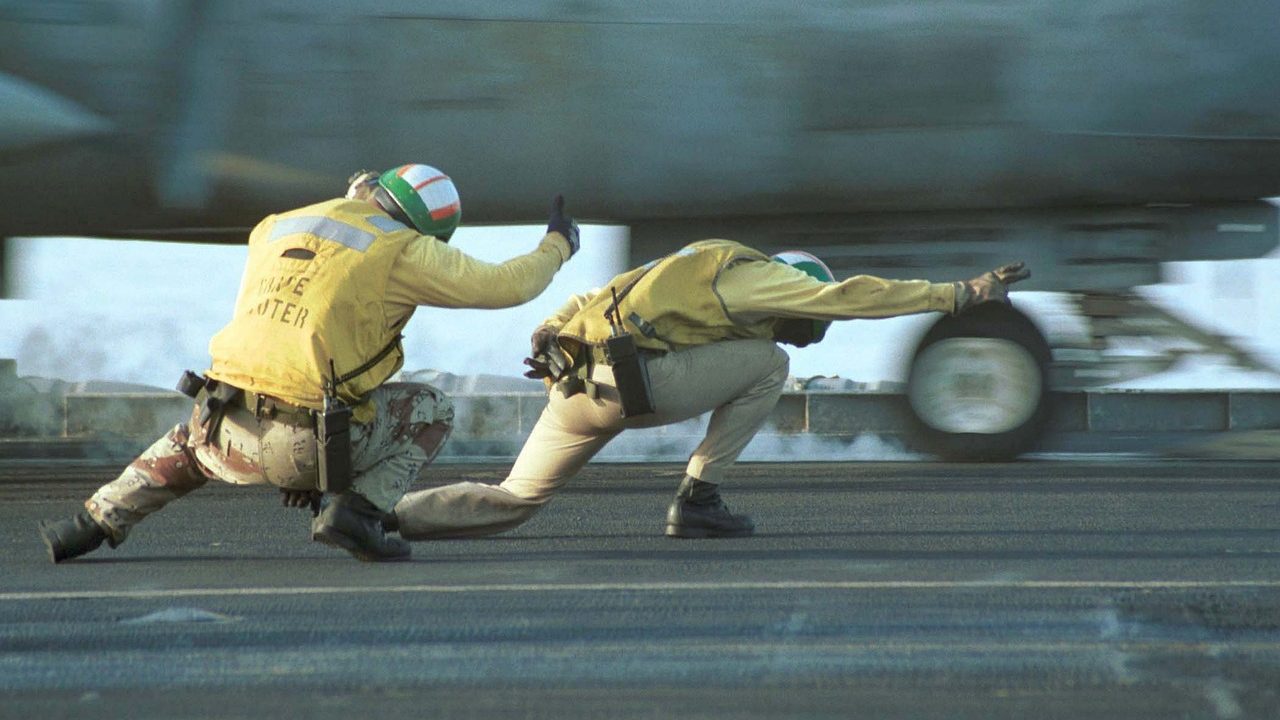
The United States set a Saturday deadline for Iran to publicly renounce attacks on shipping in the Strait of Hormuz. Tehran did not comply. The U.S. conducted new strikes, and Iran responded by targeting Qatar, Bahrain, and the United Arab Emirates — three nations hosting significant American military infrastructure — rather than striking U.S. forces directly.
The targeting choice reflects a deliberate Iranian strategic logic: by hitting Gulf Arab states instead of American forces, Tehran is attempting to fracture the coalition and create political pressure on Doha, Manama, and Abu Dhabi to distance themselves from U.S. operations. Whether that strategy succeeds depends on how much those governments fear Iranian retaliation versus how much they depend on American security guarantees.
Adding another layer of complexity, the Trump administration explicitly barred Israel from participating in U.S. strikes on Iran — a remarkable diplomatic signal that analysts are still processing. One reading is that it represents an attempt to prevent the conflict from expanding into direct Israeli-Iranian confrontation; another is that it creates significant friction with Jerusalem at a moment when Israel would ordinarily expect to be consulted on any operation against its principal adversary.
The uncertainty surrounding Iranian leadership compounds the danger. Khamenei's burial featured a masked figure whose identity intelligence agencies have not confirmed. Iran's new supreme leader has issued public statements vowing revenge, and President Trump has reportedly threatened to 'decimate' the country — but, by accounts in the coverage, nobody outside the Iranian inner circle knows with certainty who is making decisions in Tehran. When the counterpart for negotiation or deterrence is unclear, military escalation becomes harder to calibrate.
Analysts also noted that Trump has apparently left standing orders to bomb Iran if he is assassinated, but that no sitting president can legally bind a successor's military decisions — meaning Vice President Vance, not Trump, would control any retaliation response. The U.S. Air Force's announcement that it is buying 11,000 cruise missiles to rebuild stockpiles offers its own signal: Pentagon planners are not expecting this to conclude quickly. Roughly 20 percent of the world's traded oil transits the Strait of Hormuz, and any sustained disruption of shipping there would send energy prices to levels that would stress the global economy.
Ukraine's Missile Deficit, Poland's Grievance, and Rubio's Venezuela Gambit
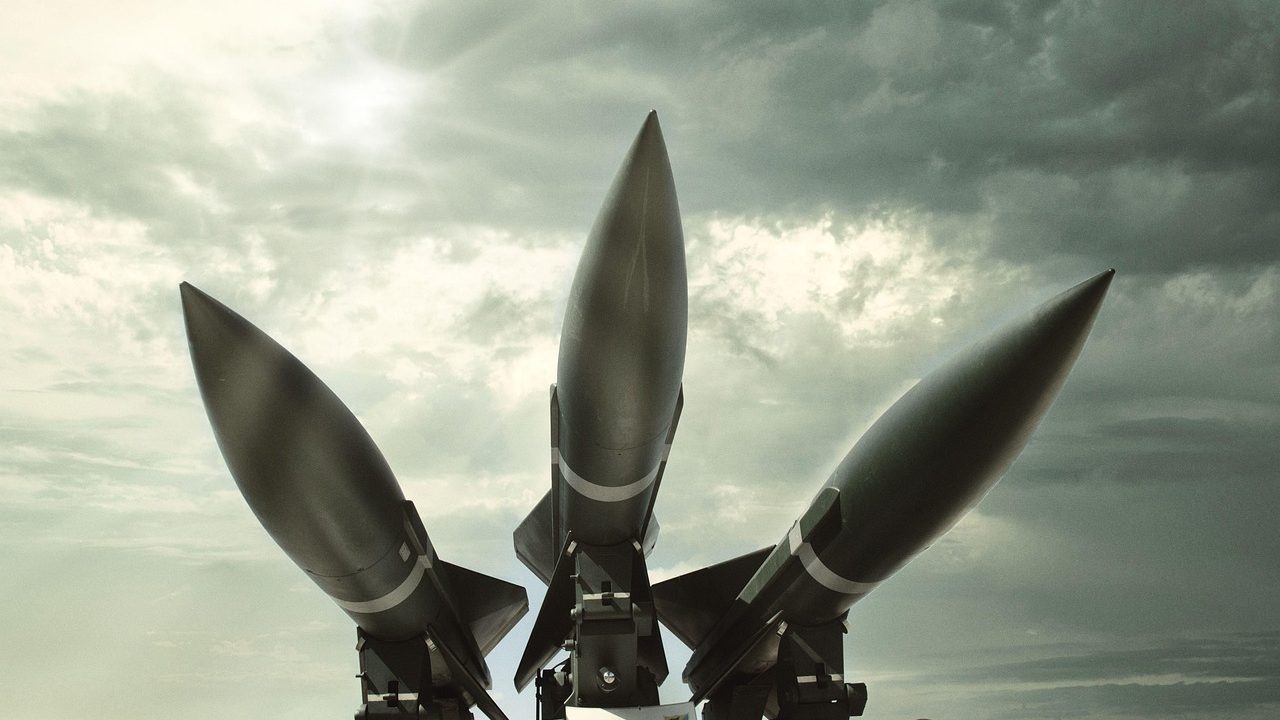
Russia executed an overnight missile and drone barrage across Ukraine, killing a significant number of people — the grinding rhythm of a war measured in daily strikes and daily casualties. What distinguishes the current moment is that President Zelensky has announced a significant diplomatic reshuffle specifically designed to address what his office describes as a critical Patriot interceptor shortage. The interceptors cost roughly four million dollars each, and Ukraine is burning through them faster than production lines can replenish them.
Zelensky's decision to restructure embassy staff around the single mission of converting allied pledges into actual deliveries reflects a frustration building for months. Congressman McCaul's remark that Ukraine Patriot production 'serves Lockheed Martin' captures a real shift in how some in Washington are framing continued support — less as a democracy-and-values commitment than as an industrial-policy benefit that depletes adversary stockpiles and tests American weapons in live combat. That framing is arguably more durable in the current political environment because it appeals to a different coalition.
The Poland-Ukraine relationship faces a separate strain. Zelensky announced that exhumations of victims from the 1943 Volyn massacres — in which Ukrainian nationalist forces killed somewhere between 50,000 and 100,000 ethnic Poles — will begin within days, with the announcement timed to the massacre's anniversary. It is a genuine act of historical reconciliation, but Poland remains a critical logistics corridor for Western weapons deliveries to Ukraine, and how Warsaw responds will matter enormously for the practical question of whether that supply line stays open.
A New York Times investigation into Secretary of State Marco Rubio's control over Venezuela policy describes something specific: not merely an influential cabinet official, but one who has consolidated personal authority over Venezuela strategy to a degree unusual even by the standards of a strong secretary of state, reportedly operating with unusual autonomy from normal interagency processes. Concentrated decision-making with less institutional check tends to produce more volatility, whatever the outcome in any specific case.
Graham Dies, McConnell Hospitalized, and Democrats Fracture Ahead of Midterms
Senator Lindsey Graham died at 71 after a sudden illness, removing from the Senate Foreign Relations Committee one of the most versatile political operators in the Republican Party — a figure who had navigated the gap between hardliners and pragmatists on foreign policy across multiple administrations. His death comes at a moment when the U.S. is conducting active military operations in the Gulf. South Carolina's Republican governor will appoint a successor, keeping the seat red, but institutional knowledge and relationships built over decades do not transfer by appointment.
Graham's death coincides with Mitch McConnell approaching a full month hospitalized. Work crews have been renovating McConnell's Washington home while he remains in the hospital, and CNN took the unusual step of publicly distancing itself from commentator Scott Jennings's claim to have spoken with the senator — an extraordinary move that suggests either the network could not verify Jennings's account or that someone close to McConnell pushed back hard enough to prompt a formal statement. The Senate's senior Republican leadership is in genuinely fragile shape.
On the Democratic side, veteran strategist James Carville publicly accused far-left primary winners of undermining Democratic chances in the 2026 midterms by targeting moderate incumbents rather than focusing energy on defeating Republicans. The argument has consumed Democratic internal politics for roughly a decade, and it is sharpening now because the stakes are real: Democrats see a potential path to a Senate majority but need to hold and flip seats in states where far-left nominees would likely lose general elections. Democrats are also watching their Senate majority hopes reportedly erode in Maine and Michigan.
Kamala Harris published an essay calling on Democrats to 'grow a backbone' on voting rights, specifically warning about redistricting implications after the Supreme Court's gutting of the Voting Rights Act. Her decision to write essays rather than lead a formal political operation suggests she has not settled on her next institutional role, but she is clearly positioning herself as a voice on civil rights and democratic participation. Separately, a Kansas ballot amendment to elect Supreme Court justices directly — driven by voter frustration over abortion rulings — is emerging as a potential bellwether: Kansas was the first state to reject a post-Dobbs abortion restriction in a referendum, and another such vote there would signal that populist pressure on the judiciary is not limited to the federal level.
AI's Reckoning: Explosives Manuals, Military Ultimatums, and State-Sponsored Fakes
A Cambridge University study based on interviews with actual Boko Haram fighters found that the group is using ChatGPT and other frontier AI models to design explosives, troubleshoot weapons systems, and coordinate logistics. This is not a hypothetical concern — it is documented, ongoing, and operational. Fighters reportedly describe using these tools to obtain specific engineering guidance, which puts enormous pressure on OpenAI, Google, Anthropic, and others to explain why safety filters did not catch this use, and gives significant ammunition to those in Congress and the Pentagon who want more aggressive government oversight of frontier AI deployment.
That pressure is already materializing in concrete form. The Pentagon is pushing contractors to drop Anthropic by September 1st — a remarkably compressed timeline that reflects a fundamental product disagreement. Anthropic has built constitutional constraints into its Claude model that limit its use for certain military applications, including assistance with weapons targeting in some contexts. The Air Force views those constraints as incompatible with operational needs. Anthropic views them as non-negotiable safety commitments. There is no obvious compromise because the disagreement is about core product design, not contract terms.
Elon Musk added characteristic complexity to the picture by calling Anthropic 'the AI leader' — a genuine compliment directed at a direct competitor to his own xAI venture — while simultaneously telling Tesla staff to use Grok, his own company's model. OpenAI and Anthropic also issued warnings about a Chinese disinformation campaign with a specific mechanism: fake accounts creating the impression that their AI tools are being used to spread Chinese state narratives, essentially laundering propaganda through the reputational credibility of American AI companies. The intent appears to be blurring the line between authentic AI-generated content and state-directed influence operations.
Meta, meanwhile, pulled its Muse Image tool — which allowed users to manipulate other people's public Instagram photos without their knowledge — after less than a week, following a rapid public backlash. The sequence of events: rapid launch, outcry, quiet removal. The fact that the feature launched at all suggests either that legal and policy review did not happen, or that it happened and failed. The episode reinforces concerns about Meta's judgment on privacy-sensitive AI features and is becoming a recognizable pattern for the company.
San Francisco protests outside the offices of OpenAI, Anthropic, and Google reflect a different kind of pressure: civil society concern about development pace, safety commitments, and labor practices. The fact that protesters targeted Anthropic — which has explicitly positioned itself as the safety-focused company — alongside the others suggests the movement's critique is aimed at the entire industry model, not specific corporate behavior.
Tariffs, Chips, and Subscriptions: Tech Policy Moves to a New Arena

Google's Gemini chief published a ranked list of the top ten user complaints about the app after soliciting feedback on X — simultaneously an act of transparency and a measure of how intense competitive pressure from OpenAI, Anthropic, and others has become. A year ago, Google would have routed this through a controlled focus group. Today, competitive pressure requires being seen to respond publicly and quickly.
The White House used the threat of semiconductor tariffs to pressure Apple into partnering with Intel for chip sourcing — a case study in industrial policy by executive leverage. The administration essentially told one of the world's most valuable companies that its vendor relationships were a matter of national policy, then used targeted tariff threats to move that decision in a specific direction. Intel has been struggling for years relative to TSMC and Samsung in advanced chip manufacturing; getting Apple as a customer would represent significant validation for its manufacturing revival. Whether tariff threats against a specific company's sourcing decisions are the appropriate instrument for building a domestically anchored semiconductor supply chain is a question the episode leaves open.
Ethereum co-founder Vitalik Buterin publicly called on Elon Musk to remake X as an AI governance hub — a proposal interesting less as a practical plan than as a window into how people in the crypto and decentralized technology communities think about the absence of any coherent global forum for AI safety and governance discussions. New York City's adoption of a 'click to cancel' subscription rule — following the federal version being struck down — signals that consumer protection regulation is moving to the city level, creating a patchwork compliance challenge for national companies but ensuring the protections exist somewhere even when they fail federally. Chinese AI company MiniMax, which went public and saw its stock fall sharply after insider lock-up expiry, subsequently raised $2 billion — a sign of how hungry capital remains for AI exposure even in turbulent conditions.
AI Inflation, Refining Crunch, and the German Auto Collapse in China

S&P futures were sitting at 7,620 Sunday morning, up roughly 0.4 percent, suggesting markets were not yet in panic mode over the Gulf crisis. Goldman Sachs published an analysis this week arguing that AI investment and adoption could add 50 basis points — half a percentage point — to U.S. inflation over the coming years. The inflationary pressure Goldman identifies comes from two sources: the massive capital spending required to build AI infrastructure, including data centers, power grid upgrades, and chip manufacturing, which drives up costs in construction, energy, and specialized labor; and AI-driven demand stimulation that could boost consumption faster than supply chains can respond.
Fuel prices are rising even though crude oil prices are falling — one of the more counterintuitive economic situations in recent months. The gap exists because the refining sector is operating at record stress levels, expanding the margin between crude and refined products significantly. Consumers are paying more even as the underlying commodity gets cheaper, the kind of disconnect that makes inflation politically toxic because it is visible and immediate even when the technical explanation is somewhat complex. Trump-backed Freedom Fuel stations are under separate scrutiny, with reporting raising questions about opaque ownership structures and pricing — scrutiny that arrives alongside Trump's financial disclosure showing he holds millions in Micron stock while Micron pledged $250 million to the administration, creating conflict-of-interest optics at a moment when the administration is actively making semiconductor policy.
Volkswagen, BMW, and Mercedes each reported more than 30 percent sales declines in China for the second quarter. German automakers have spent decades building China into their largest single market and are now losing ground to domestic Chinese electric vehicle manufacturers at a pace that outstrips their ability to respond with competing products. The challenge is not only product — it is brand positioning, dealer networks, and the reality that Chinese consumers who historically preferred German engineering are increasingly choosing domestic alternatives as Chinese EV quality has improved dramatically.
Thirty thousand Amazon corporate workers were laid off, and months later many remain unemployed and report burnout from extended job searches. If Amazon engineers and product managers — people with elite credentials from one of the world's most recognized employers — are struggling to find work for months, it is a real-time indicator of supply-demand imbalance in tech hiring: either AI is already reducing demand for some of these roles, or the broader tech hiring cycle is still contracting, or both.
Fusion Goes Public, Wildfires Rage, and Genetic Data Finds New Owners

Japan completed the first test flight of its reusable rocket, joining the small club of nations with that capability — currently dominated by SpaceX. A successful first test flight is not the same as operational reliability, but it is the foundational step that opens a development timeline, and it represents a meaningful shift in the global launch market.
General Fusion became the first fusion energy company to go public, closing its SPAC merger on Friday and expecting to begin trading on Nasdaq under the ticker GFUZ on July 13th. Fusion energy has been described as thirty years away for decades. A publicly traded fusion company now faces quarterly calls, audited financials, and milestone disclosures — pressure that will either accelerate the technology by injecting capital and discipline, or produce a painful public experiment in the gap between scientific promise and commercial reality. Separately, Elon Musk claimed Starlink now delivers 10 gigabits per second speeds worldwide, demonstrated in Alaska's northernmost city — a figure roughly a hundred times faster than most home broadband, though a demonstration in a specific location under specific conditions differs significantly from average user experience across the network.
Wildfires have burned across vast stretches of Colorado and Utah, with the Aspen Acres fire alone destroying a large number of structures. A heat dome is forecast to blanket most of the United States next week, driving new fire risks and creating dangerous conditions for tens of millions of Americans without adequate cooling. Seventy Massachusetts beaches were closed due to bacterial contamination — a quieter environmental story that is part of the same broader pattern of warming waters and weather extremes stressing ecological systems in ways with direct public health consequences.
A judge blocked California's lawsuit against the company that acquired 23andMe's genetic database following the firm's bankruptcy. When 23andMe went bankrupt, millions of people's genetic information became a transferable asset. California attempted to use state tort litigation to protect those consumers; the judge blocked that suit. The ruling does not leave the data entirely unprotected, but it does mean protection must come from somewhere other than state litigation — putting the burden back on federal legislation that has not materialized.
Larry David's Golf Moment, Jagger on Fame, and Pokémon's Price Playbook

Larry David's appearance at the American Century Championship celebrity golf tournament at Lake Tahoe became the kind of organic viral moment no marketing team could engineer. Playing his first round at the tournament, the 'Curb Your Enthusiasm' creator reportedly turned the event into what observers called must-see television — a reminder that golf as a spectator sport has long struggled with a perception of stiffness that celebrity tournaments exist to dissolve.
Mick Jagger, in a recent interview, claimed that fame 'damages your state of mind.' The observation is both obvious from one of the most famous humans alive and worth taking seriously as qualitative data: Jagger is 82 years old and has been a global celebrity since before most of the world's population was born. The public conversation around the mental health of athletes, musicians, and public figures has grown substantially, and six decades of lived experience in extreme public attention gives his framing a weight that a younger celebrity's similar claim would not carry.
The WNBA commissioner canceled a scheduled interview with Dan Patrick amid scrutiny over Caitlin Clark, who has become the most commercially significant player in women's basketball's recent history. Questions around Clark involve a mix of sports analysis, media dynamics, racial dynamics within the league, and the WNBA's strategy for capitalizing on her drawing power. Canceling media appearances tends to amplify the underlying controversy rather than contain it, and that is what occurred.
Leaked internal Pokémon Company documents revealed plans to push game prices beyond $60 — toward $80, based on pre-order listings — confirming what the gaming industry has been signaling obliquely for several years. Development costs have risen substantially. The documents also suggest a strategy of explicitly encouraging fans to purchase both versions of each dual-release game, a long-standing feature of the franchise's business model that now appears to be a calculated revenue maximization strategy rather than merely a design quirk.