NATO Convergence, AI Valuation Warnings, and Mars Organics: A World in Motion
From a pre-summit Berlin conclave of Europe's top defense ministers to a $18 trillion AI bubble warning and the most complex organic carbon yet found on Mars, Thursday, June 25, 2026 delivered a convergence of geopolitical, financial, and scientific inflection points that will shape the months ahead.
“Believing the technology works and believing the stocks are expensive are not mutually exclusive positions.”
How this was made Verified AI
Every Intellegix briefing is generated from that day's broadcast and run through automated checks before it publishes — with a human paged on any flag. Here is the trail for this edition.
Ukraine on the Offensive: NATO Allies Align Before Ankara Showdown

A striking confluence of diplomatic signals has reframed the Ukraine conflict in the space of 48 hours. French President Macron declared a 'reconvergence' between Europe and the United States on Ukraine strategy, NATO officials stated on the record that Ukrainian strikes are threatening President Putin's grip on power, and the U.S. State Department publicly described Ukraine as 'winning the war for now' — a significant shift in official Washington language. President Trump, whose relationship with President Zelensky was famously hostile, went so far as to call the Ukrainian leader 'courageous.'
The structural engine behind this diplomatic realignment is a Berlin meeting of defense ministers from Europe's five largest military powers — France, Germany, the United Kingdom, Poland, and Italy — convened specifically to unify positions ahead of the NATO summit in Ankara on July 7th and 8th. That kind of pre-summit coordination among the alliance's heavyweights typically signals anticipation of a contested agenda. Macron's public 'reconvergence' framing suggests the internal European fear that Trump would withdraw U.S. support has, at least temporarily, eased.
On the battlefield, Zelensky announced that Russian drone guidance relay stations along the Belarusian border have stopped operating — a meaningful operational shift, given that Russian drones had used Belarusian territory as a routing corridor, posing consistent problems for Ukrainian air defenses. Zelensky had issued a one-week ultimatum specifically targeting those stations, and whether Belarus acted voluntarily or under behind-the-scenes pressure remains unclear.
NATO officials' claim that Ukrainian strikes are threatening Putin's political position lands against a backdrop of a Russian economy under severe strain, documented domestic resistance to conscription, and tensions within the Russian military command structure dating to the 2023 Wagner mutiny. The deeper tension the Ankara summit must navigate pits Macron's consistent push for a diplomatic off-ramp that avoids humiliating Moscow against the firm insistence of Poland and the Baltic states on full territorial integrity — two positions that have not been reconciled.
Complicating the picture further, Trump said alongside NATO Secretary General Rutte at the White House that he personally asked Turkish President Erdogan to stay out of the Iran conflict — a remarkable claim that signals Turkey's potential involvement was a genuine concern at the highest levels. Meanwhile, Iran is publicly calling the U.S. deal 'a declaration of America's defeat,' framing widely read as domestic audience management. Trump's formal request to Congress for $88 billion — approximately $70 billion for Pentagon operations related to Iran — and Lockheed Martin winning a $35 billion contract to quadruple THAAD missile defense output suggest the post-deal phase is far from settled.
Courts, Primaries, and the Socialist Shock Reshaping Democratic Politics

Three distinct currents are simultaneously reshaping the American domestic political landscape: federal courts are actively redrawing the boundaries of executive power over elections and immigration; the Democratic Party's internal fault lines are cracking open along ideological lines; and the aftershocks of New York City's democratic socialist primary sweep continue to reverberate far beyond the five boroughs.
The Supreme Court delivered a 6-3 ruling siding with the Trump administration on immigration enforcement — a decision that signals how the conservative supermajority is likely to approach executive power cases more broadly, with the Court itself reportedly acknowledging that 'blockbuster cases loom.' Simultaneously, Chief U.S. District Judge Denise Casper in Boston converted her preliminary injunction against Trump's elections executive order into a permanent ban, making her the third federal judge to do so. Three permanent injunctions against the same order constitutes a clear constitutional pattern: the administration's theory of executive authority over election administration has not found purchase in the federal courts. Adding further complexity, the U.S. Postal Service chief told the Senate that the Postal Service will not deliver ballots without state voter lists — a statement with significant operational implications for vote-by-mail states heading into 2028.
The New York City race — in which democratic socialist Zohran Mamdani swept the Democratic primary — has produced some of the sharpest intraparty rhetoric of the current cycle. Trump and Speaker Johnson reached immediately for the word 'communism,' a deliberate rhetorical choice designed to nationalize a local result as a 2026 midterm frame. More revealing was Senator John Fetterman's response: the Pennsylvania Democrat went on record warning against what he called the 'dirtbag left,' publicly breaking from his party's progressive flank with notably direct language. Fetterman has been carving out a distinctive political lane — his positions on Israel, his blue-collar aesthetic, and now this comment place him at odds with both the AOC wing and the Clinton-era centrist brand, a positioning that may be durable in Pennsylvania but faces real tests in 2028 Senate dynamics.
The 2028 presidential picture is already reshuffling in ways that would have seemed unlikely at the start of the year. Governor Gavin Newsom, widely considered the default frontrunner after the 2024 cycle, has dropped to double-digit deficits behind former Vice President Kamala Harris in recent primary surveys. Harris apparently retains the institutional loyalty and name recognition that confer structural advantages in early polling, while Newsom's California political record — including the homelessness crisis, cost-of-living pressures, and a recall attempt — presents a harder sell nationally than his early positioning suggested.
Smaller stories fill out a picture of sustained legal and political turbulence. Democrats are calling for an investigation into what is being described as Trump's $250 bill project; a judge has ordered the Trump team to explain a tarp covering something at the Kennedy Center; the DOJ has threatened to sue California over a Glock ban taking effect July 1st; and Paramount denied promising Trump any changes at CNN amid a state lawsuit threat — a reminder that media ownership, regulatory scrutiny, and editorial independence are increasingly entangled.
The AI ROI Divide: Huang's Bold Claim Meets Goldman's $18 Trillion Warning

Nvidia CEO Jensen Huang declared this week that the debate over whether artificial intelligence generates a return on investment is definitively over — a forceful claim from the executive whose company has benefited more than any other from AI infrastructure spending. Goldman Sachs released analysis in the same week pushing back with striking specificity: $27 trillion in AI-related market capitalization gains set against roughly $9 trillion that Goldman's macroeconomic models suggest is fundamentally justified, producing an $18 trillion discrepancy the bank frames as an 'earnings bubble' risk. The historical parallel Goldman invoked is the late 1990s telecom and internet infrastructure buildout — a period when the underlying technology proved real and transformative, but the monetization timeline was years longer than markets assumed.
Both positions can be simultaneously defensible. Huang's ROI claim holds at the enterprise level, where specific use cases — code generation, customer service automation, drug discovery pipelines — are producing measurable productivity gains. Goldman's overvaluation argument concerns aggregate timing and the gap between current earnings and priced-in expectations. Believing the technology works and believing the stocks are expensive are not mutually exclusive positions.
The most concrete enterprise AI deployment data point of the week came from Verizon, whose CTO Yago Tenorio said 33,000 employees now use Claude Code — Anthropic's software development AI — and that the company is targeting what it calls Level 4 network autonomy, meaning the network essentially manages and repairs itself using AI with minimal human intervention. That is not a pilot program; it is full-scale deployment across a major U.S. telecommunications infrastructure.
A more awkward AI story emerged when Representative Luna defended her staff's use of AI after metadata from a Claude artifact was found embedded in a defense bill summary circulated in Congress — the document notation that Claude Code leaves in certain formats had not been stripped before sharing. Luna's defense was that AI is a legitimate productivity tool and the summary's substance was accurate. But the incident exposed that no standardized congressional protocol exists for AI-assisted legislative work, a significant gap given that defense bill summaries shape how members vote on a $700-plus billion annual authorization.
Former employees told The Information that over half of Grok's traffic is pornographic — adult content generation is reportedly the majority use case for xAI's flagship AI product. That context informed LinkedIn co-founder Reid Hoffman's sharp public comments this week calling xAI 'completely collapsed' as a serious AI company, alongside a reference to SpaceX IPO filings showing $6.4 billion in 2025 losses. A Washington Post study finding that major AI chatbots lean left on political questions will have political legs regardless of methodological debate, and is expected to accelerate legislative pushes in Republican-led states already pursuing laws requiring political balance in government-used AI systems.
Orbital AI, Chip Wars, and a Talent Drain Threatening Google DeepMind

SpaceX has confirmed the name 'Starmind' for its planned orbital AI constellation — a system of up to one million satellites designed to run AI inference directly in orbit rather than routing data through ground-based data centers. With an FCC filing real and a trademark filed, the scale is staggering: one million satellites would be roughly thirty times the current Starlink constellation. The concept envisions distributed computing infrastructure in low Earth orbit that eliminates ground-based latency pathways. The announcement arrives as SpaceX shares are reportedly sliding amid what journalists are describing as a 'governance backlash,' with former SEC Chairman Gary Gensler predicting a 'great rebalancing' as early investors' lockup periods approach expiration in August — a concern that a large volume of exits concentrated in a short window could pressure SpaceX's private market valuation.
Nvidia CEO Jensen Huang described data centers built on smuggled chips as a 'dead end' this week — a carefully chosen phrase that doubles as both a technical argument about supply chain integrity and a message to customers in restricted markets that long-term risk from contraband hardware is prohibitive. Export controls on advanced AI chips remain one of the primary mechanisms the U.S. is using to maintain computational advantage over China, and Huang's comment amounts to an endorsement of that policy framework from a company whose revenues are directly shaped by it.
The talent story most worth watching may be the exodus from Google DeepMind. Bloomberg reports that two more senior researchers — Jonas Adler and Alexander Pritzel — are set to leave for Anthropic, following earlier departures that reportedly included a Nobel laureate and the co-lead of the Gemini project. DeepMind has historically been Google's crown jewel for fundamental AI research, the organization behind AlphaFold and AlphaGo. Losing multiple senior researchers in rapid succession is a signal about how researchers assess relative intellectual freedom, resources, and mission clarity across organizations — and right now Anthropic appears to be winning that assessment.
A report that the White House has sidelined Anthropic CEO Dario Amodei from high-stakes export control negotiations — working instead with co-founder Tom Brown — suggests trust or relationship dynamics at the government interface that go beyond technical substance. On the product side, Google added a screen-control capability to Gemini 3.5 Flash, its fast and cost-efficient model tier. Screen control — the ability to observe and interact with a computer display rather than just respond to text — is a key requirement for genuine autonomous agent tasks. That this capability is now available in the lightweight, cheap tier means agentic AI is moving down-market quickly.
A Nature peer-review critique questioning Microsoft's Majorana quantum chip claims rounds out the technology picture. Microsoft staked a significant portion of its quantum computing roadmap on the Majorana approach — a type of topological qubit theoretically more stable than competing designs. A challenge to the underlying experimental evidence in one of the world's most rigorous scientific journals is not merely a PR problem; it represents a potential years-long setback for a multi-billion-dollar research program.
Markets on Edge: Flash Crash Risks, Trade Doctrine Shifts, and Energy Crosscurrents
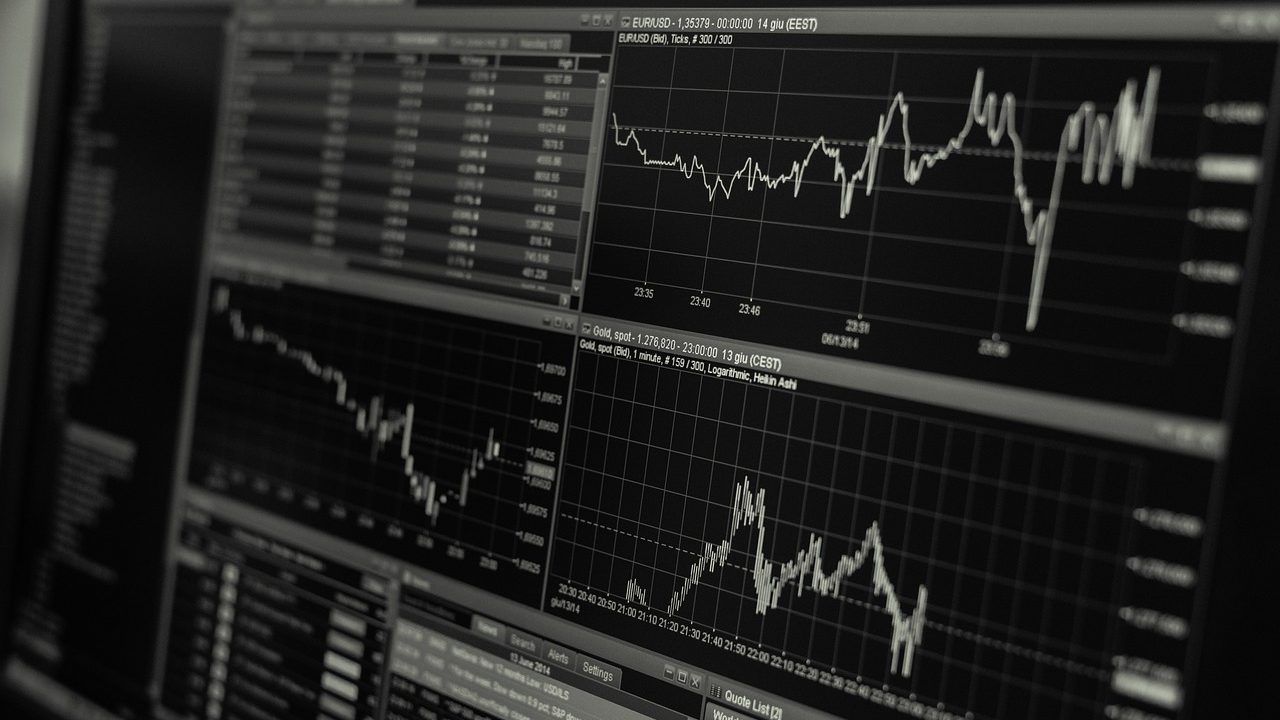
JPMorgan raised its S&P 500 year-end target to 7,800 this week — implying roughly another 4% of upside from S&P futures trading around 7,483 at the time — while simultaneously warning that deteriorating market liquidity conditions make sharp, rapid drawdowns more likely than headline index levels suggest. The mechanism JPMorgan flagged is passive fund dominance: when a large proportion of equity ownership sits in index funds, selling pressure in a downturn can overwhelm market maker capacity to absorb orders. Placed alongside Goldman Sachs's warning of an $18 trillion AI valuation gap, the combined picture is of a market optimistic about its destination but fragile about the journey — a description that historically precedes volatility rather than smooth compounding.
Treasury Secretary Bessent's call for an end to 'unconditional' U.S. trade openness marks a significant philosophical statement. The U.S. has operated under a broadly liberal trade framework since the post-World War II institutional order, and positioning the problem as 'unconditional' openness rather than trade itself frames the administration's approach as seeking reciprocity — but the practical implication is a more transactional, bilateral trade architecture departing substantially from the multilateral rules-based system governing most of the past seven decades. FedEx returning $800 million in tariff refunds starting in August is a concrete downstream effect of those shifts, reflecting the scale of tariff-related flow adjustments following recent trade recalibrations.
Trump ordered the Department of Justice to investigate Exxon and Chevron for allegedly keeping pump prices high despite falling crude costs — a classic political maneuver with genuine economic substance behind it. The Iran peace deal removed a significant geopolitical risk premium from crude oil prices, but pump prices have not come down proportionally. The structural explanation involves refining margins, distribution costs, and retail pricing lag dynamics that are not linearly tied to crude spot prices. Politically, the visible gap between approximately $70 crude and $3.50 gasoline is a daily grievance that resonates with consumers regardless of the technical explanation.
Billions continue flowing into U.S. solar investment despite rhetorical hostility from the current administration toward green energy mandates. The reason is straightforward: solar is now the cheapest form of new electricity generation in most of the country on a levelized cost basis, meaning the economics work without subsidies in a growing share of markets. Policy headwinds slow acceleration but do not reverse the fundamental cost dynamic. Amazon's announcement that it is hiring 11,000 interns while committing $200 billion to AI infrastructure spending connects directly to this energy story — large-scale GPU clusters can draw as much power as a small city, and the intersection of AI infrastructure buildout, solar investment growth, and grid capacity constraints is shaping up as one of the defining infrastructure stories of the coming decade.
Nearly 400 Newspapers Sue OpenAI and Microsoft in Landmark Copyright Fight

Nearly 400 local newspapers have joined a coalition lawsuit against OpenAI and Microsoft, making it the largest coordinated local media challenge to AI companies in U.S. history. The core claim is that millions of newspaper articles were scraped without permission to train ChatGPT and Copilot. What distinguishes this coalition from earlier copyright suits is its geographic breadth — not just major metropolitan papers but regional outlets covering local courts, zoning boards, school districts, and municipal governments in communities where that coverage exists nowhere else.
The legal theory is standard copyright infringement: the newspapers hold copyright in their articles, the AI companies copied that content without a license, and the unlicensed reproduction constitutes infringement. OpenAI and Microsoft have advanced fair use and transformative use defenses — arguing that training a language model is legally analogous to a human reading and learning from materials, and that outputs don't substitute for original articles in the market. Both defenses are plausible under existing case law, but existing case law largely predates AI training at this scale.
The remedies question is what gives the lawsuit its economic weight. Copyright statutory damages in the U.S. can reach up to $150,000 per work for willful infringement. With millions of articles potentially at issue, even a fraction of that ceiling produces astronomical theoretical exposure — though courts rarely award maximum statutory damages at scale, and cases of this kind tend to resolve in licensing negotiations. The lawsuit gives the newspaper industry negotiating leverage it did not previously hold.
Separately, a study found that games labeled with AI-generated content on Steam saw sales drops of up to 60% compared to otherwise similar unlabeled games. This is consumer preference revealed through purchasing behavior, not surveys — players are actively deprioritizing AI-generated content in ways that stated preference research might not have predicted. If audiences develop reliable detection intuitions for AI-generated creative work and systematically favor human-made alternatives, the economics of AI creative substitution look substantially different from current projections. Cloudflare CEO Matthew Prince warned this week that AI will 'destroy small businesses' by enabling large corporations to automate the customer relationship work and specialized knowledge tasks that have historically been competitive advantages for smaller operators.
Mars Organics, Ancient Maya Cities, and a Cosmos Larger Than Our Models Predicted

NASA's Perseverance rover has found what scientists describe as the most robust organic carbon yet detected in Mars' Jezero Crater — the mission's primary objective site for assessing whether Mars could have supported microbial life. Complex organic carbon compounds in ancient lake sediments represent as close to a positive astrobiology signal as the mission has produced. The critical context: organic molecules are necessary preconditions for life as we understand it but are not sufficient evidence of it, as they can form through purely abiotic geochemical processes. The complexity and concentration of the compounds detected, in an environment with documented evidence of ancient liquid water, is what elevates the scientific significance. A definitive test requires returning samples to Earth — which the Mars Sample Return mission is designed to accomplish, budget permitting.
In a separate breakthrough, scientists have for the first time detected what they are calling the 'fingerprints' of a black hole's event horizon — direct observational evidence of the gravitational effects at the boundary beyond which light cannot escape. General relativity predicts these effects with extraordinary precision, and while indirect evidence has existed from gravitational wave detections and Event Horizon Telescope images, detecting the specific gravitational imprint of the event horizon itself represents a new level of confirmation of physics theorized by Einstein more than a century ago.
A Nature study finding cosmic structures ten times larger than current models predict may be the most theoretically disruptive finding of the week. The standard cosmological model — Lambda-CDM — predicts a certain scale of structure formation based on how matter clumps under gravity after the Big Bang. Structures at ten times the predicted scale are not a minor parameter adjustment; they constitute a fundamental challenge to the underlying model. The largest structures under current models are filaments and superclusters spanning hundreds of millions of light-years — ten times that scale begins to approach the size of the observable universe itself, with profound implications for how cosmologists understand dark matter distribution and possibly the cosmological principle that the universe looks roughly the same in all directions.
Closer to Earth, archaeologists have discovered an intact Maya city in the Mexican jungle apparently never previously disturbed or excavated. LiDAR remote sensing — which uses laser pulses from aircraft to penetrate jungle canopy and map structures beneath — has revolutionized Maya archaeology over the past decade, enabling researchers to locate and assess sites without physically clearing vegetation. An untouched Maya city is an extraordinary scientific resource because stratigraphic layers, artifact placements, and organic materials remain in their original context. In South Africa's Rising Star Cave, protein analysis of 23 Homo naledi teeth found no male genetic markers — all known specimens appear to be female, suggesting either deliberate sex-specific burial practices that would imply significant cognitive and social sophistication, or a rare genetic phenomenon. Either interpretation is described by researchers as scientifically extraordinary.
European Heat Waves, Western Wildfires, and an AI Investment Thesis Under Scrutiny

Europe is enduring a severe heat wave that scientists are attributing to a jet stream blocking pattern rather than El Niño — a distinction with significant policy implications. Jet stream blocks occur when the normally eastward-moving river of upper-atmosphere air stalls over a region, allowing high pressure to park beneath it and temperatures to climb for days or weeks without moderation. Climate scientists have identified a potential link between Arctic warming — which is occurring faster than warming at mid-latitudes — and increased jet stream instability, raising the prospect that heat wave frequency and duration in Europe could increase independently of El Niño cycles.
In the American West, the Storm Prediction Center is warning of major fire weather escalation this weekend, with Utah already managing 349 active wildfires. An incoming trough is expected to bring wind gusts above 40 miles per hour alongside single-digit humidity percentages — conditions fire meteorologists describe as extreme fire weather — compounding drought stress from a dry spring and early-season heat. Meanwhile, a COVID vaccine study finding that the 2025-2026 vaccines cut hospitalizations by roughly half was blocked from release by acting CDC Director Jay Bhattacharya over methodology concerns before being published directly in the Journal of the American Medical Association after peer review. The incident raised questions about the appropriate role of political appointees in determining which government-funded research reaches the public.
The week's most argued-over consensus — that AI infrastructure investment will continue at its current pace and produce economy-wide productivity gains on a timeframe justifying current valuations — deserves rigorous skepticism. The bear case centers on integration timelines. Enterprise software adoption, even genuinely transformative software, typically takes seven to ten years to penetrate an industry deeply enough to move aggregate productivity statistics. The personal computer was commercially available in 1981; the productivity gains from computing did not appear clearly in macroeconomic data until the mid-1990s. The Solow paradox — 'you can see the computer age everywhere except in the productivity statistics' — ran for more than a decade.
The specific assumption most worth probing is enterprise workflow integration. Strong evidence exists that AI tools work for specific, well-defined tasks — code generation, document summarization, image production. Far weaker evidence exists that organizations are successfully restructuring their workflows to capture the full productivity potential. Most current deployment patterns appear to resemble augmentation of existing jobs rather than genuine process redesign. If that is the dominant pattern — individuals working somewhat faster rather than organizations working fundamentally differently — aggregate productivity effects will be real but modest.
Two empirical signals to watch: S&P 500 earnings per share growth in the technology sector for fiscal year 2026, reported in early 2027, will reveal whether AI-investing companies are generating revenue growth and margin expansion that reflects genuine productivity gains or merely rising costs. And Amazon's $200 billion AI infrastructure commitment, paired with AWS CEO Matt Garman's statement that half of white-collar jobs 'may change' due to AI, will face a concrete test — if Amazon's own headcount and productivity metrics by mid-2027 do not demonstrate that thesis internally, it would constitute meaningful evidence that the productivity transformation is slower than the infrastructure investment implies.