Iran Seizes Hormuz, AI Nobel Defects, and Markets Brace: A World in Flux on Juneteenth 2026
From Iranian maritime power grabs to a Nobel laureate's surprise career move and Goldman Sachs sounding alarm bells, Saturday, June 20th, 2026 delivered a torrent of interlocking crises testing the durability of global institutions, markets, and diplomatic agreements alike.
“Iran is signaling that the new diplomatic arrangement does not mean a retreat of Iranian power but rather an expansion of it.”
How this was made Verified AI
Every Intellegix briefing is generated from that day's broadcast and run through automated checks before it publishes — with a human paged on any flag. Here is the trail for this edition.
Iran Reaches for Hormuz — and a $105 Billion Oil Future
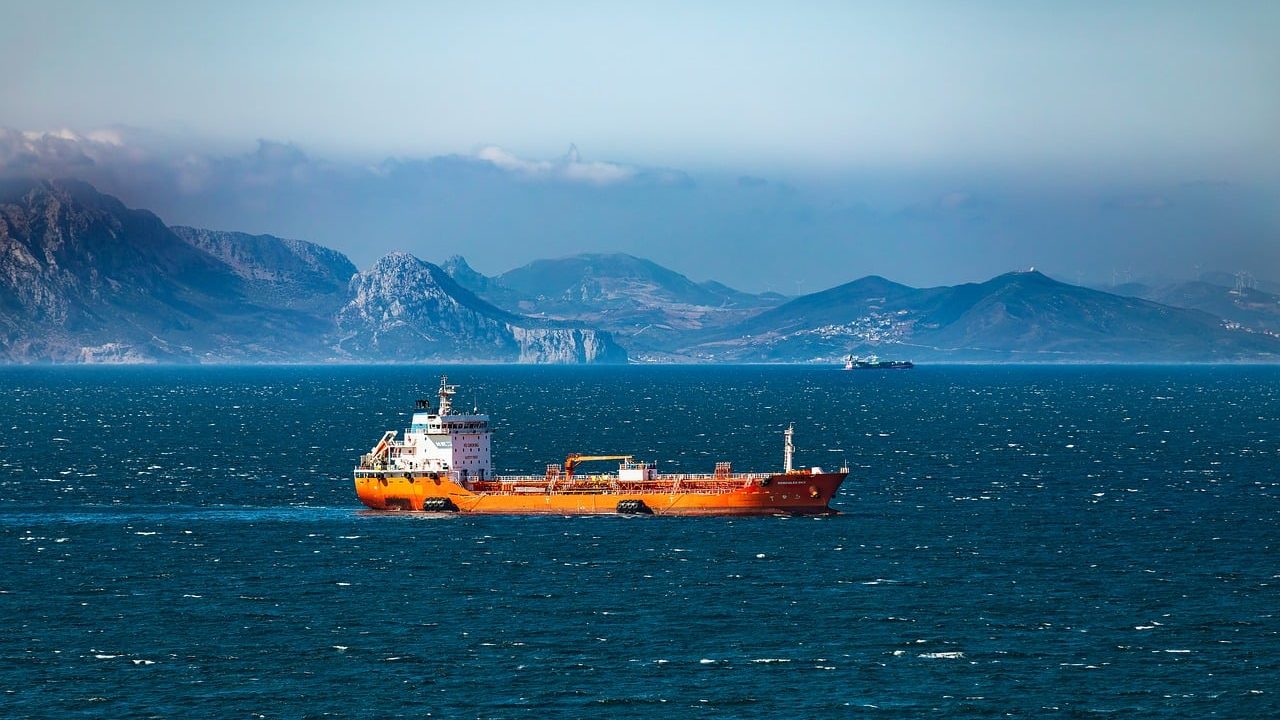
Iran has announced it is asserting control over the Strait of Hormuz, demanding that ships obtain transit permits before passing through the waterway that carries roughly 20 percent of the world's daily oil supply. The announcement connects the Persian Gulf to the Gulf of Oman and serves as the only practical export corridor for Saudi Arabia, Kuwait, Iraq, the UAE, and Qatar. Tehran has set a 60-day grace period before enforcement begins, after which it reportedly plans to collect actual transit fees from commercial vessels.
The move came directly on the heels of the memorandum of understanding President Trump signed with Iran this week, and analysts say the timing is deliberate — Iran is signaling that the new diplomatic arrangement does not mean a retreat of Iranian power but rather an expansion of it. The economic stakes are formidable: Iran has separately been projected to earn up to $105 billion annually in oil export revenues if the deal fully lifts export barriers and production returns to pre-sanctions levels. For context, Iran's entire government budget in recent constrained years has been estimated at roughly $60 to $70 billion.
Criticism of the deal arrived from an unusual quarter. Former President Obama said this week that the United States may end up worse off after both the war with Iran and the agreement Trump signed to end it, joining what has become a bipartisan chorus of critics. His concern, as reported, centers on the memorandum's lack of the verification rigor that characterized the original 2015 JCPOA, and on the possibility that Iran received significant economic relief without surrendering equivalent concessions on nuclear development or regional proxy activity. A separate estimate from 350.org placed the cost of the Iran conflict at $374 billion funneled to the fossil fuel industry — framing the episode in both economic and climate terms.
Trump's own relationship with the agreement is already complicated. In a high-profile Axios interview this week, the president described his efforts to keep Israeli Prime Minister Netanyahu — in Trump's own words — 'sane,' a characterization that signals a genuine rift with an ally who reportedly pressed for military action against Iran and now views the signed deal as deeply threatening. Trump also told Axios he believes he can prevent Israel from escalating militarily in Lebanon, a confident assertion given the current regional trajectory. The next sixty days, as the transit permit grace period runs out, will be the first real test of whether the diplomatic arrangement holds.
Ukraine Front: Drone Strikes, Diplomatic Signals, and a Fractured Mediation

Russia's drones struck the Mondelez factory in Ukraine for the second time this year, targeting a facility that makes brands including Oreo and Cadbury and that has maintained Ukrainian production as a gesture of economic solidarity. Analysts say the repeat strike reflects a deliberate economic warfare strategy — raising the cost for Western companies to remain, hollowing out Ukraine's civilian productive base, and forcing supply chain decisions that gradually weaken the country's economic resilience.
Ukrainian President Volodymyr Zelenskyy made the striking claim this week that Russian President Vladimir Putin is 'physically afraid' of his own military leadership — a statement that carries clear strategic messaging even as it demands scrutiny. The attempted Wagner mutiny of 2023 and a series of abrupt career endings among Russian commanders provide at least some analytical foundation for the claim, though Zelenskyy's interest in projecting Russian weakness is equally evident.
Russian Foreign Minister Sergei Lavrov said he was 'surprised' by Secretary of State Marco Rubio's apparent withdrawal from the U.S. mediator role in the Ukraine conflict — diplomatic language that observers interpreted as Moscow signaling it had been counting on reduced American engagement. That development sits in apparent tension with separate reporting that the U.S. has signaled support for Ukraine missile production licenses, suggesting the administration may be pulling in different directions across its State Department and defense and national security apparatus.
The Kremlin reiterated it is open to European talks but 'won't accept ultimatums' — a formula it has deployed consistently to project willingness to negotiate while preemptively excluding the conditions under which meaningful talks would be possible. For European NATO allies already recalibrating their own defense spending and diplomatic positions, the combination of a freshly signed U.S.-Iran deal, visible Trump-Senate Republican friction, and a president claiming unlimited executive authority in an Axios interview is creating a rapidly shifting strategic environment.
Unlimited Power and Eroding Support: Trump's Week in Domestic Politics
President Trump stated explicitly in an Axios interview this week that he sees no limits to his own presidential power — a declaration landing in a saturated news cycle but carrying serious constitutional weight. In the same interview, Trump named Chinese President Xi Jinping and Indian Prime Minister Narendra Modi as his most admired world leaders, both of whom govern systems with significant authoritarian characteristics. Taken together, the statements were widely noted as a coherent signal about the administration's governing philosophy rather than isolated remarks.
A new poll shows Trump's approval rating in Pennsylvania has fallen to 29 percent, a striking figure in a state he won in 2024 and a genuine bellwether for working-class political sentiment. The internal finding driving that number: nearly half of Pennsylvania voters now say they are financially worse off than a year ago, up sharply from 36 percent in March — a 14-point deterioration in just three months on the single metric that historically matters most for political durability.
On her final day as Director of National Intelligence, Tulsi Gabbard released classified files related to Dr. Anthony Fauci — a move timed precisely to ensure the release occurred under her authority while preventing a successor from reversing the decision. Incoming acting intelligence chief Bill Pulte, a housing official with no intelligence background, reportedly arrived requesting a full employee list and planning hundreds of firings on his first day, a rapid personnel disruption that national security professionals warn creates genuine operational risks around source protection and classified information handling.
A $1.7 million no-bid government contract awarded to Greenwater Services for cleaning the Reflecting Pool has drawn scrutiny after reports linked the company to a donor who gave $300,000 to Trump. Separately, lawyers representing U.S. deportees in Sierra Leone say their clients face forced return to documented persecution, raising legal challenges under U.S. and international protections that courts are likely to adjudicate. And on Juneteenth — now a federal holiday — the president's official schedule omitted any acknowledgment of the holiday for the second consecutive year.
A Nobel Prize Walks Out of Google — and AI's Safety Gaps Come Into Focus
John Jumper, the co-creator of AlphaFold 2 and co-recipient of the 2024 Nobel Prize in Chemistry, has left Google DeepMind for Anthropic in one of the most significant talent moves the AI industry has seen this year. AlphaFold essentially solved a fifty-year-old problem in biology — predicting protein structures — in a way that is now accelerating drug discovery across hundreds of research programs globally. Losing a researcher of that stature is not merely a reputational setback for DeepMind; it risks shifting the gravitational pull of its scientific research agenda, given the tendency of elite researchers to cluster around one another.
President Trump described Anthropic as 'very responsible' in the same Axios interview where he claimed unlimited presidential power — a characterization that carries real regulatory significance. Anthropic was founded by former OpenAI researchers who left over concerns about the pace of AI development, and a positive signal from an administration broadly skeptical of technology regulation reduces near-term risk of punitive action against the company while potentially pressuring competitors to seek similar political goodwill.
Researchers reported this week that OpenAI's fixes for generating graphic violence and sexual content from simple prompt variations remain incomplete, with minor rephrasing still capable of producing disturbing outputs. The finding arrives precisely as the industry attempts to project maturity and readiness for broader deployment. Separately, neuroscientists published a warning that AI chatbots are not conscious despite sounding empathetic — that the empathetic quality of language model outputs is a statistical pattern, not evidence of inner experience — a distinction with significant implications for mental health applications, grief support products, and companion AI being built on assumptions the technology may not support.
A new study found a 20-percent reduction in exam scores for students who used AI assistance with their homework. The proposed mechanism is that AI performs the cognitive work the homework was designed to develop, meaning students complete assignments without building the underlying skill — a learning intervention problem distinct from simple academic dishonesty. Meanwhile, Perplexity unveiled Brain, a self-improving memory system that builds a context graph from past tasks, pointing toward AI agents that accumulate institutional knowledge over time rather than resetting between sessions — a development with substantial implications for enterprise deployment where context and history are critical.
Google Takes On Nvidia's Empire, Apple Eyes a $200 Price Hike
Google is deploying billions in financial guarantees to win customers for its TPU chips, mounting a direct challenge to Nvidia's dominance in AI compute infrastructure. Nvidia's competitive advantage has rested not just on chip performance but on CUDA, a programming framework with hundreds of thousands of trained developers and billions of lines of production code — making switching a software migration problem as much as a hardware decision. Google's financial guarantee strategy effectively removes the risk premium from that switch, offering balance sheet backing from a roughly $2 trillion company in lieu of competing on raw chip specifications alone.
Marvell Technology hit a record high ahead of its S&P 500 debut, illustrating how index inclusion functions as a near-guaranteed market catalyst: with roughly $7 trillion in assets benchmarked to the S&P 500, every passive fund tracking the index must buy shares to maintain proper weighting, creating an anticipated demand wave that market participants price in before the actual inclusion date. Marvell makes custom AI chips and networking hardware, meaning it is benefiting both from the index mechanics and from genuine business momentum in the AI infrastructure build-out.
Apple CEO Tim Cook described tariff costs as 'unsustainable' this week, and Bank of America analysts subsequently projected a $200 price increase on iPhone Pro models as a result. The current iPhone Pro starts at roughly $1,099 to $1,199 depending on configuration; a $200 increase would push the base model toward $1,299 to $1,399 — a real affordability threshold in an environment where, as polling in Pennsylvania showed, nearly half of surveyed voters already report feeling financially worse off than a year ago.
Toyota and Nissan both warned Japanese buyers about defects in U.S.-built cars, a development tied to the rapid production shifts both automakers undertook to navigate tariff exposure. Moving manufacturing across borders means changing workforce skills, supply chain relationships, and quality management systems — adjustments that require time trade policy timelines do not always allow. Tesla, meanwhile, saw its CEO Elon Musk publicly call its credit rating 'ridiculously low' after SpaceX earned higher marks, a frustration analysts attributed to Tesla's compressed margins in a competitive EV market versus SpaceX's more stable cash flows from government contracts and Starlink subscriptions.
Goldman Sounds the Alarm as Treasury Holdings Hit an 18-Year Low
Goldman Sachs issued an asymmetric selloff warning this week, flagging that downside risk in financial markets is disproportionately larger than potential upside — a signal the firm's research desk deploys selectively. The warning points to a confluence of live risk factors: geopolitical volatility stemming from the Iran Strait of Hormuz situation, Federal Reserve uncertainty on the rate path, and a market priced for relatively optimistic outcomes on both fronts. S&P futures were sitting at roughly 7,556, off about 0.19 percent from the prior session. Fundstrat's Tom Lee, who has maintained a consistently bullish posture for much of the past several years, added his voice to the cautionary chorus, specifically flagging conditions later in 2026.
China's U.S. Treasury holdings fell to $651.1 billion — an 18-year low, the lowest level since 2008 — underscoring a structural shift in the global financial system. For decades, China recycled trade surpluses into U.S. government debt as a core mechanic of global capital flows; that mechanism is visibly weakening. Japan and the United Kingdom have been increasing their Treasury holdings in the same period, suggesting demand is shifting rather than collapsing entirely, but the changing composition of who finances U.S. debt carries long-term implications for interest rates and fiscal flexibility.
U.S. Treasury Secretary Scott Bessent reportedly pressed Japanese officials to raise interest rates sooner rather than later to avoid larger disruptions down the line. Bank of Japan April minutes confirmed internal discussions about rate hikes 'every few months,' suggesting genuine appetite for normalization within the BOJ. Japan has maintained ultra-low interest rates for decades; a normalization process would have significant implications for the yen, for Japanese government debt costs, and for the unwinding of the carry trade — which has historically triggered abrupt bouts of global market instability when it reverses.
The USDA projected record production costs for every major crop in 2027, with the cost drivers shifting from fuel and fertilizer — the dominant pressures of 2022 and 2023 — toward seed, chemicals, labor, and cash rents. Labor and land costs are structurally sticky in ways that commodity price spikes are not; when farmers face record costs, they either pass them through in food prices, reduce planted acreage, or exit the business, all three outcomes carrying downstream effects reaching every grocery store in the country. Separately, a White House analysis estimated that banning anticompetitive hospital-insurer contract clauses could save $45 billion annually, with such arrangements currently inflating premiums for approximately 24 percent of employer-insured Americans — a policy claim grounded in Sherman Act antitrust analysis targeting specific exclusionary contracting conduct rather than market size alone.
Bank of America analysts projected the FIFA World Cup will generate a $45 billion boost to global GDP, with $19 billion flowing to the United States alone — roughly four times the economic activity generated by the Taylor Swift Eras Tour, per the same analysts. Novo Nordisk shares climbed despite a simultaneous ransomware crisis, a testament to investor conviction in the oral semaglutide opportunity; analysts have projected the GLP-1 market as a multi-hundred-billion-dollar global opportunity over the next decade, apparently large enough to absorb near-term operational disruption.
Ebola Spreads Across Borders, SpaceX Eyes Tuesday, and Hyundai Completes Boston Dynamics Deal
The Democratic Republic of Congo Ebola outbreak has reached 896 confirmed cases with 232 deaths, and 75 healthcare workers are among those infected — a figure the WHO describes as making this the third-largest Ebola epidemic in recorded history. The circulating strain is the Bundibugyo virus, somewhat less lethal than the Zaire strain that killed over 11,000 people in the 2014-2016 West Africa outbreak, but spreading in ways that are straining response capacity. The healthcare worker infection count is particularly alarming because those are the personnel running treatment centers; when they fall ill, treatment capacity collapses and community transmission accelerates.
Cross-border transmission has been confirmed, with 19 cases recorded in Uganda — elevating the situation from a national emergency to a regional one. The WHO noted that Uganda has not recorded new cases since June 5th, a cautiously positive signal, but the DRC situation continues to evolve rapidly. Uganda has functional Ebola response infrastructure from prior outbreaks, though managing contact tracing and quarantine across borders increases logistical complexity substantially.
SpaceX is targeting Tuesday for the first launch of its Starfall capsule, its next-generation crew and cargo vehicle building on the Dragon platform's decade of operational history. The launch arrives against a competitive backdrop that includes Boeing's Starliner — which has faced well-documented difficulties — and an emerging Chinese commercial space sector. Hyundai completed its full acquisition of Boston Dynamics in a $325 million deal this week, with SoftBank exercising its put option to sell the remaining 9.65 percent stake. The transaction closes a decade-long ownership journey that took the robotics company from Google to SoftBank to Hyundai, each transition reflecting a different theory about what robotics was worth; Hyundai's full ownership signals a clear strategic intent to integrate Atlas robots into its manufacturing operations with the IP fully under its control.
Magna International founder Frank Stronach was convicted of sexual assault, a significant development given Magna's stature as one of the largest auto parts suppliers in North America, with over $40 billion in annual revenue. Stronach had stepped back from day-to-day operations years before the conviction.
U.S. Open History, Drake's Legal Troubles, and a Deal That May Not Hold
The U.S. Open opened at Shinnecock Hills in Southampton, New York, with Wyndham Clark shooting a 64 — a remarkable score on one of the USGA's most punishing layouts. The round was overshadowed by what officials described as a historic first: Joaquin Niemann received a two-stroke penalty under Rule 1.2 for throwing his club after a bad shot, reportedly the first time such a conduct penalty has been assessed in U.S. Open history. Golf has historically governed itself through a culture of self-policing, and the USGA's willingness to act formally signals a recalibration of how conduct at the sport's highest level will be managed going forward.
Drake's OVO fashion brand is facing a $4.6 million lawsuit from an investment firm alleging default on loan obligations, while the artist is simultaneously reportedly in talks to sell a 50 percent stake in the brand to Authentic Brands Group — the company behind Reebok, Brooks Brothers, Forever 21, and Sports Illustrated. ABG's model extracts value through licensing rather than direct retail, leaving the future character of OVO as an ABG property an open question. Golfer Phil Mickelson's lawyer confirmed this week that he resigned from a club following misconduct allegations, adding a new chapter of off-course controversy to a career that has already encompassed LIV Golf participation and prior insider trading allegations.
The episode closed with a structured stress-test of its own most confident claim: that the U.S.-Iran deal represents a genuine de-escalation that will ultimately benefit global oil markets. The skeptical counterargument rests on three assumptions embedded in the optimistic read — that Iran will honor its commitments, that the Strait of Hormuz transit permit demand is posturing rather than genuine escalation, and that the agreement is durable enough to survive its first serious test. All three assumptions have historical precedents cutting the other direction: Iran departed from the spirit of the original JCPOA within two years of signing, the transit permit demand arrived within days of the current deal, and Trump-era agreements have historically depended on personal relationship dynamics rather than institutional verification frameworks.
The concrete indicator to watch, as framed in the analysis, is what happens when Iran's 60-day grace period on transit permits expires. If Iran begins enforcing permit requirements against even a single commercial vessel, two immediate market signals will follow: a spike in oil prices above the current baseline, and a sharp move in shipping insurance rates in the Gulf. Those two signals arriving in close proximity would constitute an unambiguous indicator that the optimistic read of the deal requires serious revision — and that the speed and relationship-driven deal-making style of the current administration may not produce durable outcomes in a region with more than forty years of accumulated conflict.