Iranian Gunfire, AI Billions, and Bubble Warnings: The Week's Defining Tensions
From Iranian Revolutionary Guard forces firing on a U.S. tanker in the Strait of Hormuz to Anthropic closing a $65 billion funding round amid dot-com bubble comparisons, the currents of geopolitical conflict and technological ambition converged in a single volatile week.
“The median S&P 500 stock now carries short interest at 3% of market capitalization — the highest level since 2011 — with healthcare shorts at a 30-year peak”
How this was made Verified AI
Every Intellegix briefing is generated from that day's broadcast and run through automated checks before it publishes — with a human paged on any flag. Here is the trail for this edition.
Hormuz on the Brink: Tanker Attack Tests a Fragile Ceasefire

Iranian Revolutionary Guard Corps naval forces fired on a U.S. tanker in the Strait of Hormuz, marking a dangerous escalation in one of the world's most critical maritime corridors — even as both sides reportedly reached a preliminary agreement to extend their ceasefire by 60 days. The dual-track dynamic, military provocation running in parallel with diplomacy, has drawn immediate comparisons to what analysts describe as a classic posture in which battlefield aggression serves as leverage at the negotiating table.
The economic reverberations extended well beyond the Persian Gulf. The Strait handles roughly 20% of global petroleum liquids transit, and the conflict has already driven freight costs for U.S. liquefied petroleum gas shipments to Asia from a normal range of $15–20 per metric ton to $60–80 per metric ton — a tripling that has prompted Asian buyers to cancel American LPG cargoes outright. European Central Bank officials warned that an Iran war could 'doubly scar' eurozone consumers: first through direct energy price inflation, and then through broader economic contraction as global trade routes grow more expensive and uncertain.
Iran broadcast claims on state television that its forces had destroyed American aircraft at Bushehr, an assertion U.S. officials categorically rejected. The denial adds a layer of information warfare to an already combustible situation, suggesting Tehran may be projecting domestic strength while simultaneously pursuing diplomatic off-ramps.
A separate but related security concern emerged with the Pentagon's confirmation that adversaries have been using commercial advertising data to track U.S. troops. Foreign intelligence services purchasing location data from commercial data brokers to monitor American military personnel represents, in the assessment of defense analysts, a fundamental challenge to operational security in the digital age — one that extends the battlefield far beyond conventional theaters.
Regional tensions beyond the Gulf added further complexity. Cuba warned of potential 'bloodshed' as U.S. military presence in the Caribbean intensified, while Guatemala agreed to conduct joint military strikes with the United States against drug gangs, signaling that American security commitments are being tested across multiple hemispheres simultaneously.
Russia's Open Door: Ukraine Warns of Rapid Deployment Risk

Ukraine has warned that Russia could deploy troops to bases in Belarus 'at any moment,' even as Kyiv reports no current Russian military buildup near the border. The assessment reflects a concern that the infrastructure for rapid deployment already exists, meaning traditional warning indicators such as large-scale troop movements may no longer provide adequate advance notice.
Belarus shares borders with three NATO members — Poland, Lithuania, and Latvia — and Russian forces positioned there could potentially threaten the Suwalki Gap, the narrow land corridor between Belarus and the Russian exclave of Kaliningrad that connects the Baltic states to the rest of the alliance. That corridor has long been identified by NATO planners as a critical vulnerability.
Russia has also reportedly added electronic warfare systems to its Shahed drones specifically to jam Ukrainian interceptors, a technological escalation that, if effective, would alter the calculus of Ukraine's air defenses. The development illustrates the rapid adaptation cycle of the conflict: when Ukraine developed effective countermeasures against Iranian-supplied Shaheds, Russia responded with jamming capabilities.
Armenia's decision to hold its first military parade in a decade signals a continued drift away from Moscow. The country has pursued closer ties with Western nations, joined the International Criminal Court, and conducted joint military exercises with U.S. forces — steps that represent, in the view of regional analysts, a fundamental realignment away from Russia's traditional sphere of influence following the deterioration of relations since the 2020 war with Azerbaijan.
Japan's unusually blunt response to Russian criticism at the United Nations — calling it 'ridiculous' — reflected how seriously Tokyo views Russian military activities near disputed territories. Taken together, the developments across Ukraine, the Caucasus, and East Asia suggest that U.S. and NATO military planners are managing potential conflicts on at least three major fronts simultaneously, a multi-theater challenge not seen at this scale since the early Cold War.
Political Litigation Wars: Hoffman Probe, Trump Suits, and Redistricting Battles

The Chicago U.S. attorney's office clarified that its investigation targets Reid Hoffman's nonprofit organization — which funded E. Jean Carroll's lawsuits against Donald Trump — rather than Carroll herself. The distinction is legally significant: the probe appears to examine whether a wealthy donor's use of a tax-exempt organization to finance politically sensitive litigation violates federal campaign finance laws or nonprofit regulations, a question that sits in largely uncharted legal territory.
Trump simultaneously refiled a $10 billion defamation suit against the Wall Street Journal over its reporting on Jeffrey Epstein connections, naming Rupert Murdoch, News Corp, and two Journal reporters as defendants in an amended complaint. The astronomical damages figure, which legal observers note would be virtually impossible to prove from a single news article, appears designed to serve rhetorical and political purposes while subjecting news organizations to protracted, expensive litigation.
Justice Clarence Thomas ordered a response in Alabama's fight over its congressional map, after the state asked the Supreme Court to restore a GOP-backed district plan that a federal panel had blocked for being racially discriminatory. The order signals the Court may be prepared to intervene more aggressively in redistricting disputes, with potentially significant consequences for the enforcement of the Voting Rights Act.
At the state level, Tennessee Senator Oliver was stripped of committee posts following protests over a redistricting plan, illustrating how voting rights battles produce chilling effects on minority-party participation in the redistricting process itself.
The Justice Department's issuance of subpoenas to Reddit and X to unmask anonymous critics of ICE drew First Amendment concerns, given the longstanding constitutional protection of anonymous political speech. Separately, the White House launched Aliens.gov — repurposing UFO disclosure branding to display ICE arrest data and migrant encounter figures — creating what critics described as a centralized enforcement propaganda platform.
A $965 Billion Bet: AI's Infrastructure Financing Reaches Utility Scale

Anthropic closed a $65 billion funding round, valuing the company at $965 billion and placing it among the most valuable private companies in history. The capital requirements that follow are commensurate: Apollo and Blackstone are reportedly shopping a $36 billion debt deal structured specifically to fund purchases of Google's custom TPUs for Anthropic's model training operations — a financing arrangement that resembles the buildout of power plants or telecommunications networks more than a conventional venture capital deal.
European Union officials traveled to San Francisco for discussions with Anthropic described as 'Mythos talks,' signaling that European regulators are departing from their traditional pattern of attempting post-hoc regulation of American technology platforms. Instead, they are engaging directly with AI companies during the development phase, before market dominance is established.
IBM announced a $10 billion quantum computing investment alongside a separate $5 billion open-source security initiative, positioning the company to address both the near-term security requirements of enterprise AI deployment and the longer-term potential of quantum acceleration. Microsoft is expected to announce new in-house AI models at its Build conference, a move that would reduce its dependence on OpenAI and give it greater control over AI integration across its Office, Azure, and Windows platforms.
Cisco released research finding that no frontier AI model is currently safe from multi-turn attacks — a class of threat in which seemingly innocuous initial queries are followed by increasingly sophisticated prompts that gradually manipulate AI systems into producing harmful or unauthorized outputs. Unlike conventional cybersecurity threats, multi-turn attacks use normal conversational patterns, making them exceptionally difficult to defend against with traditional methods.
Vice President JD Vance warned Air Force graduates against ceding military decisions to artificial intelligence, reflecting growing concern about autonomous weapons systems in high-stakes contexts. The warning marks a shift from political rhetoric that has focused primarily on AI's economic implications, toward the question of machine judgment in situations where errors could result in loss of life or international incidents.
Autonomous Race Reordered: Waymo Leads Tesla by a Factor of Thirteen

Texas state filing requirements have revealed that Waymo operates 577 autonomous vehicles compared to Tesla's 42 — a thirteen-to-one operational advantage that upends public perceptions of the robotaxi race. The figures suggest Tesla's autonomous vehicle deployment may be considerably more limited than its stock price implies, given that a portion of the company's market capitalization reflects investor expectations about its self-driving capabilities.
Apple's redesigned Siri, revealed ahead of the company's WWDC event by Bloomberg, will arrive as a standalone chatbot application with Dynamic Island integration and auto-deleting chat history as part of iOS 27. The auto-delete feature aligns with Apple's broader privacy positioning as a differentiator from competitors, while the standalone app signals a move toward Siri as a primary AI interface rather than a voice assistant embedded in the periphery of the ecosystem.
BYD Chairman Wang Chuanfu pledged to cover all crash costs when drivers use the company's assisted-driving system, framing a goal of 'zero traffic accidents.' The commitment comes as BYD faces eight straight months of declining sales, prompting questions about whether the liability pledge reflects genuine confidence in the technology or a competitive bid to differentiate in an increasingly crowded Chinese EV market.
Kyle Vogt's robotics startup is facing a $12,000 lawsuit from an Airbnb host over alleged property damage, a small-scale case that nonetheless illustrates the liability complexities confronting the robotics industry as machines move into everyday environments.
SpaceX has claimed its internally developed AI training system, written in C for 220,000 GPUs, is more than ten times faster than Google's JAX framework. Elon Musk made the assertion, though no independent benchmarks have been provided to verify the performance claims. Separately, IREN borrowed $3.6 billion specifically to purchase Nvidia chips for Microsoft, a debt-financed infrastructure deal that further reflects the emergence of AI compute as a distinct asset class.
Bubble Watch: Burry's Warning, Thiel's Exit, and the IPO Flood Ahead
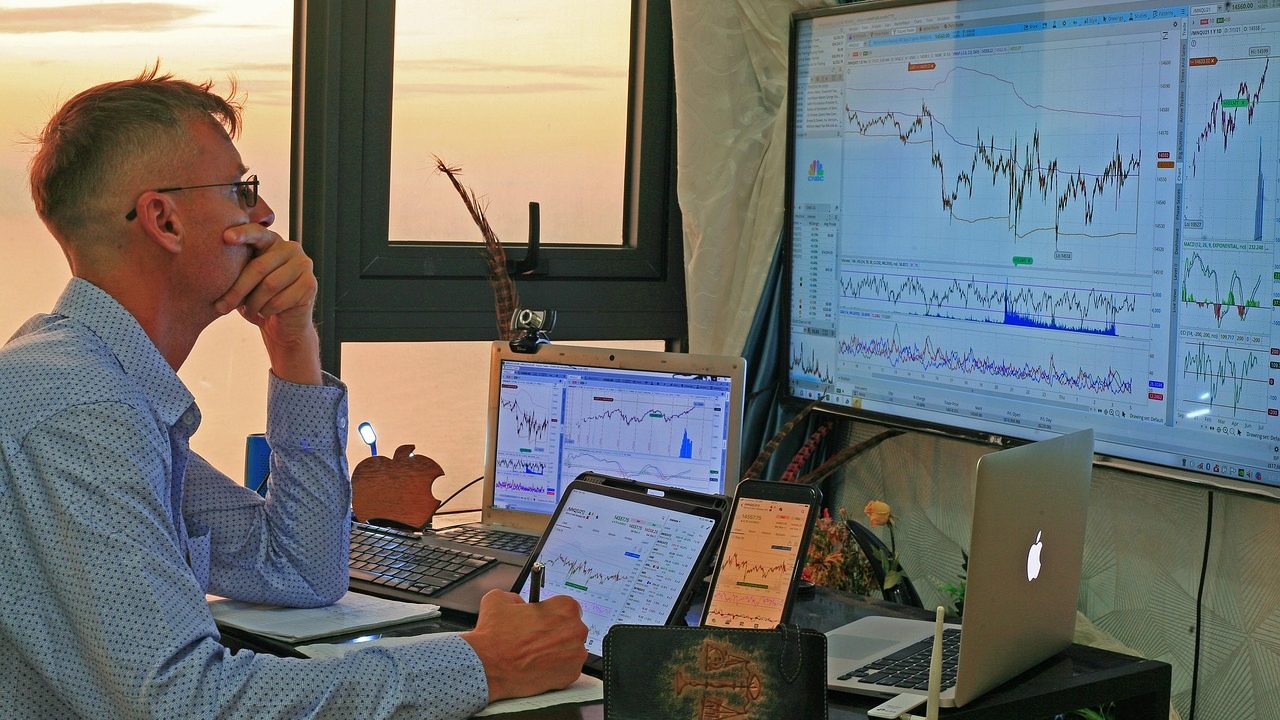
SpaceX has lowered its IPO valuation target to $1.8 trillion, a revision that coincides with Michael Burry posting a dot-com-era IPO chart warning that the rush by SpaceX, OpenAI, and Anthropic to go public mirrors the late-1990s excess that preceded the technology crash. BlackRock has separately warned that the three offerings could drain $200 billion from markets, creating portfolio reallocation pressures concentrated among institutional investors focused on growth and technology stocks.
Goldman Sachs flagged the risk of potential short squeezes as bearish bets reached decade highs. The median S&P 500 stock now carries short interest at 3% of market capitalization — the highest level since 2011 — with healthcare shorts at a 30-year peak, conditions that could trigger rapid price increases if positive catalysts emerge and short sellers scramble to cover positions.
Mark Cuban disclosed that he sold 80% of his Bitcoin holdings, calling it a failed hedge. Bitcoin has risen over 16% since the Iran conflict began, suggesting Cuban may have exited at an inopportune moment. The episode underscores the difficulty of using cryptocurrency as a reliable geopolitical hedge given its volatility, which causes it to behave more like a risk asset than a safe haven during periods of crisis.
Peter Thiel has reportedly relocated to Argentina amid concerns over U.S. wealth tax policies, following a pattern of capital flight by ultra-wealthy individuals seeking jurisdictions with more favorable tax treatment. The move suggests that wealth tax proposals in the United States are reaching levels that motivate actual behavioral changes among target taxpayers rather than serving merely as political talking points.
Kirkland & Ellis committed $500 million to build a proprietary AI platform, treating the technology as essential competitive infrastructure rather than an optional tool. The in-house development strategy — rather than licensing existing platforms — suggests the firm believes proprietary AI capabilities will yield sustainable competitive advantages in legal services sufficient to justify the investment.
Setbacks and Breakthroughs: A Rocket Explodes as Medicine and Physics Advance
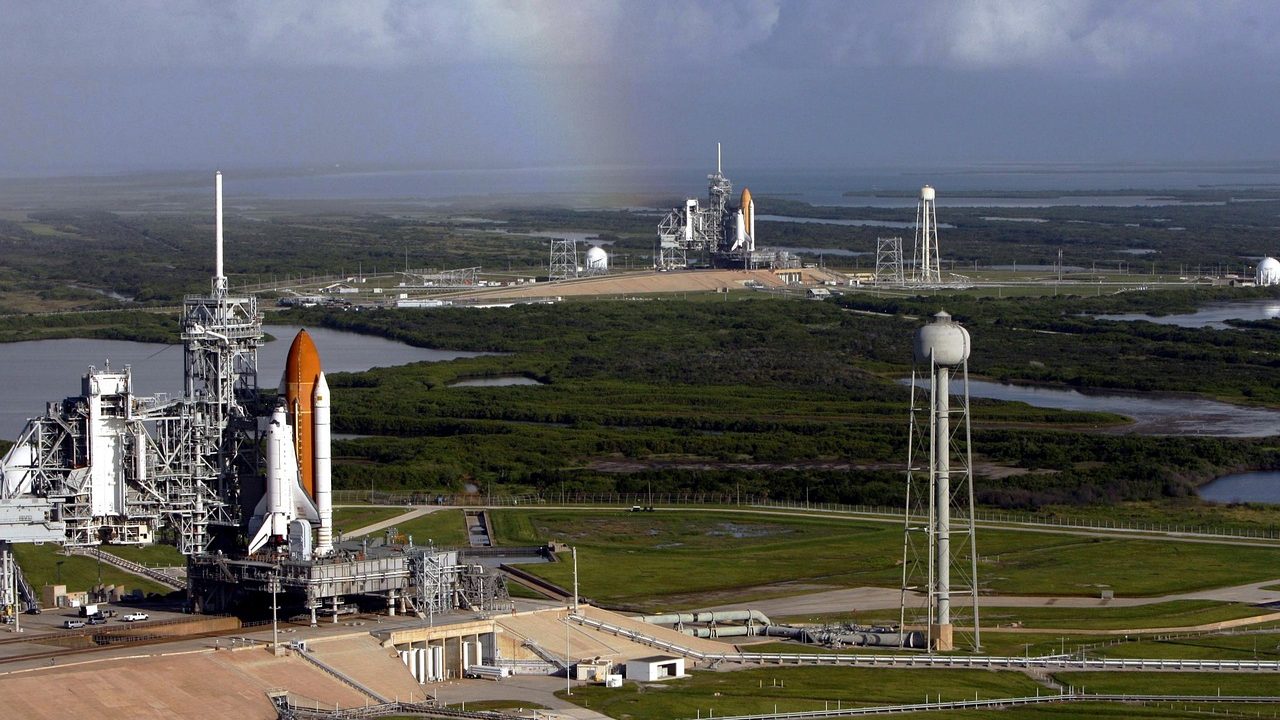
Blue Origin's New Glenn rocket exploded during testing at Cape Canaveral, delivering a significant setback to Jeff Bezos's space ambitions. New Glenn has been in development for more than a decade, and its timeline has already fallen substantially behind original projections. The explosion further delays Blue Origin's entry into the heavy-lift launch market at a moment when SpaceX continues to advance its Falcon Heavy and Starship programs.
The FDA approved the first immunotherapy combination for early-stage bladder cancer, clearing AstraZeneca's Imfinzi plus BCG as the first immunotherapy regimen for high-risk non-muscle invasive bladder cancer — the most common form of the disease. The approval is notable for extending immunotherapy, which has primarily been deployed against advanced metastatic cancers, into earlier-stage treatment, potentially establishing a precedent for similar approaches across other cancer types.
A study found that pigeons navigate using magnetic sensors located in their livers rather than their brains, a discovery that could inform the development of bio-inspired navigation systems capable of functioning without GPS — a technology that remains vulnerable to jamming and interference. Researchers and military planners have noted potential applications for aircraft, ships, and autonomous vehicles operating in GPS-degraded environments.
Two independent mathematical studies argued that dark energy — the theoretical construct that supposedly comprises approximately 68% of the universe — may be unnecessary to explain the cosmos's accelerating expansion, with general relativity and quantum mechanics potentially sufficient on their own. The researchers acknowledged that such claims require extensive observational validation before they could prompt revision of standard cosmological models.
Nvidia server manufacturer Wiwynn warned that AI infrastructure bottlenecks now extend well beyond memory constraints. Chair Emily Hong told Bloomberg that power delivery has become the top limiting factor, with shortages unlikely to ease before late 2027. Unlike chip or memory shortages addressable through increased production, power delivery constraints require electrical infrastructure upgrades involving lengthy permitting and construction timelines.
Culture, Courts, and 2028: Media Upheaval and Early Political Signals

The director of the animated series 'Book of Life' received death threats following the announcement of Amazon's AI-animated series, an episode that illustrates how AI in entertainment has shifted from a technical debate to a viscerally emotional one. When audiences perceive AI-generated content as an existential threat to human artistic expression, the resulting backlash can escalate beyond criticism into physical intimidation.
Game developer Krafton paid $250 million in bonuses following Subnautica 2's blockbuster sales, a result that reinforces the continued market appetite for human-created gaming experiences. Despite growing investment in AI-generated content, the performance suggests consumers will pay premium prices for games built on extensive human creativity, storytelling, and design.
Bari Weiss oversaw a shake-up of CBS's '60 Minutes,' installing new producers and ousting correspondents, in changes that reflect the broader pressure on legacy newsmagazine formats to adapt to audiences that increasingly consume news through social media and streaming platforms. Separately, a New York Times investigation detailed what it described as Howard Lutnick's aggressive tactics across 818 companies, raising questions about the systemic economic influence wielded by individuals who control large portfolios of businesses.
Pete Buttigieg leads early 2028 Democratic primary polling while Kamala Harris has slipped to fifth place, according to surveys cited in current reporting. Buttigieg's position suggests he has maintained a national profile and political credibility despite being out of elected office, with his tenure as transportation secretary appearing to have enhanced rather than diminished his standing among Democratic primary voters.
Treasury Secretary Scott Bessent confirmed that the Treasury Department prepared a $250 bill bearing Donald Trump's portrait, an item described as unlikely to enter general circulation given the limited utility of such large denominations but one that illustrates the current administration's interest in cementing its legacy through symbolic gestures.