Xbox Retreats, AI Margins Erode, and the Fight to Own Your Stack: Hacker News Digest for July 7, 2026
From Microsoft's quiet surrender on console hardware to a critical cloud-virtualization escape vulnerability and a seven-megabyte browser AI, Tuesday's Hacker News surfaced a single insistent question: who actually controls the infrastructure the modern world runs on.
“a diary that answers in 200 milliseconds breaks the fiction”
How this was made Verified AI
Every Intellegix briefing is generated from that day's broadcast and run through automated checks before it publishes — with a human paged on any flag. Here is the trail for this edition.
Reclaiming the Stack: Today's Hacker News in One Thread

A router you can audit to the silicon. Maps that work without a corporate data connection. Semantic search that never leaves the browser tab. Tuesday's most-discussed stories on Hacker News converged on a common anxiety: the tools that developers, engineers, and researchers depend on are increasingly opaque, cloud-tethered, or quietly surveilled.
The day's lineup spanned Microsoft's gaming retreat, collapsing AI inference margins, open hardware milestones, a serious cloud hypervisor vulnerability, and a Harry Potter–themed e-ink diary that somehow captured the imagination of a technically demanding audience. Hacker News is independent of Y Combinator and is accessible at news.ycombinator.com, where the comment threads — populated by engineers who built the systems under discussion — go considerably deeper than any summary can.
Microsoft Signals a Console Retreat in 'Resetting Xbox' Post

A post titled 'Resetting Xbox,' published on Xbox News on July 6th, drew 717 comments on Hacker News — one of the highest comment counts of the quarter — as readers parsed what amounted to a frank corporate acknowledgment that the current hardware strategy is not working. Microsoft appears to be pivoting away from traditional console hardware toward a platform-and-services model centered on Game Pass subscriptions across PC, mobile, cloud streaming, and potentially rival consoles.
The strategic backdrop is substantial. Microsoft paid $68.7 billion for Activision Blizzard in 2023, then the largest acquisition in gaming industry history, on the thesis that owning franchises like Call of Duty and World of Warcraft would drive Game Pass adoption and make Xbox hardware more attractive. That attachment has not materialized at the required rate. PlayStation 5 has consistently outsold Xbox Series X by a ratio that, depending on the quarter, runs between three-to-one and five-to-one globally.
Longtime developers in the Hacker News thread debated whether Xbox was ever primarily a hardware play or always a strategic instrument to prevent Sony from monopolizing the living room — a goal achieved even at marginal hardware profitability. A more pointed critique emerged separately: by shipping all exclusive titles on PC simultaneously, Microsoft may have trained its own customers out of buying the console at all.
Sony's discipline around exclusive titles — Spider-Man, God of War, Horizon — has driven hardware adoption in ways that subscription bundling cannot fully replicate. Microsoft's regulatory concessions during the Activision review, which required keeping Call of Duty on rival platforms, now appear to anticipate the company's own strategic direction. Concerns about the fate of the ID@Xbox indie developer ecosystem and Game Development Kit infrastructure in a cloud-first future were, notably, underrepresented in mainstream press coverage of the announcement.
AI's Margin Problem: Commodity Inference, Edge Medicine, and a Mind-Like Model Layer
An essay by Martin Alderson on GLM 5.2 — the latest model from Beijing-based Zhipu AI, a Tsinghua University spinout — attracted 286 comments with its argument that frontier AI inference is being commoditized faster than the major Western labs can construct durable moats. Zhipu's GLM 5.2 reportedly achieves benchmark performance within striking distance of GPT-4o-class models on several coding and reasoning tasks at dramatically lower cost, squeezing the pricing umbrella that OpenAI, Anthropic, and Google have relied upon. Open-weight models such as Llama, Mistral, and DeepSeek apply pressure from the opposite direction, allowing technically sophisticated customers to eliminate per-token payments entirely.
Commenters with direct experience at inference companies pushed back on the most aggressive version of the thesis. The counterargument holds that price competition is concentrated at the commodity tier — generic text generation, basic summarization — while high-margin applications in healthcare, finance, and regulated industries carry genuine switching costs rooted in reliability, safety tuning, enterprise integrations, and regulatory compliance. A hospital system, the argument runs, will not migrate from a certified clinical AI to a cheaper alternative because API costs fell twenty percent. Critics of that defense noted that the enterprise switching-cost argument has historically held until it suddenly does not, and that a ten-percent benchmark gap combined with a fifty-percent price difference is a calculation enterprise procurement teams will eventually run.
An IEEE Spectrum piece on small AI models in low-connectivity environments offered an important counterpoint to frontier-model obsession. Pharmaceutical applications in sub-Saharan Africa, rural Southeast Asia, and parts of Latin America are deploying on-device language models for drug interaction checking and dosage guidance in clinic settings where a cloud API call cannot be relied upon to return in under two seconds. The WHO estimates roughly 3.5 billion people live in areas with inadequate healthcare infrastructure, a meaningful subset of whom have mobile device access without reliable internet — a large market the frontier labs have largely ignored.
That edge inference logic connects directly to Ternlight, a Show HN project featuring a seven-megabyte embedding model that runs entirely in the browser via WebAssembly, performing semantic search over arbitrary text with no server, no API key, and no data leaving the user's device. The model uses aggressive quantization — likely four-bit weights — and a shallow architecture optimized for embedding rather than generation. For semantic search, classification, and similarity matching, it reportedly performs well enough to be genuinely useful.
A research paper from Anthropic titled 'A Global Workspace in Language Models' drew 389 points and 148 comments. The paper draws on Bernard Baars's 1980s global workspace theory of biological cognition — in which specialized brain modules share a broadcast medium that makes information globally available — and claims structural evidence for an analogous mechanism in the intermediate layers of large language models. The authors are careful not to assert that language models are conscious; the paper identifies a structural analogy, not a subjective claim. Skeptics in the HN thread argued that a loosely specified theory can be 'found' almost anywhere; enthusiasts noted that identifying a convergence layer could provide a more tractable intervention point for AI interpretability and safety research than attempting to parse the full residual stream.
Open Hardware, Persistent Tracking, and a Cloud Escape That Shook Security Engineers
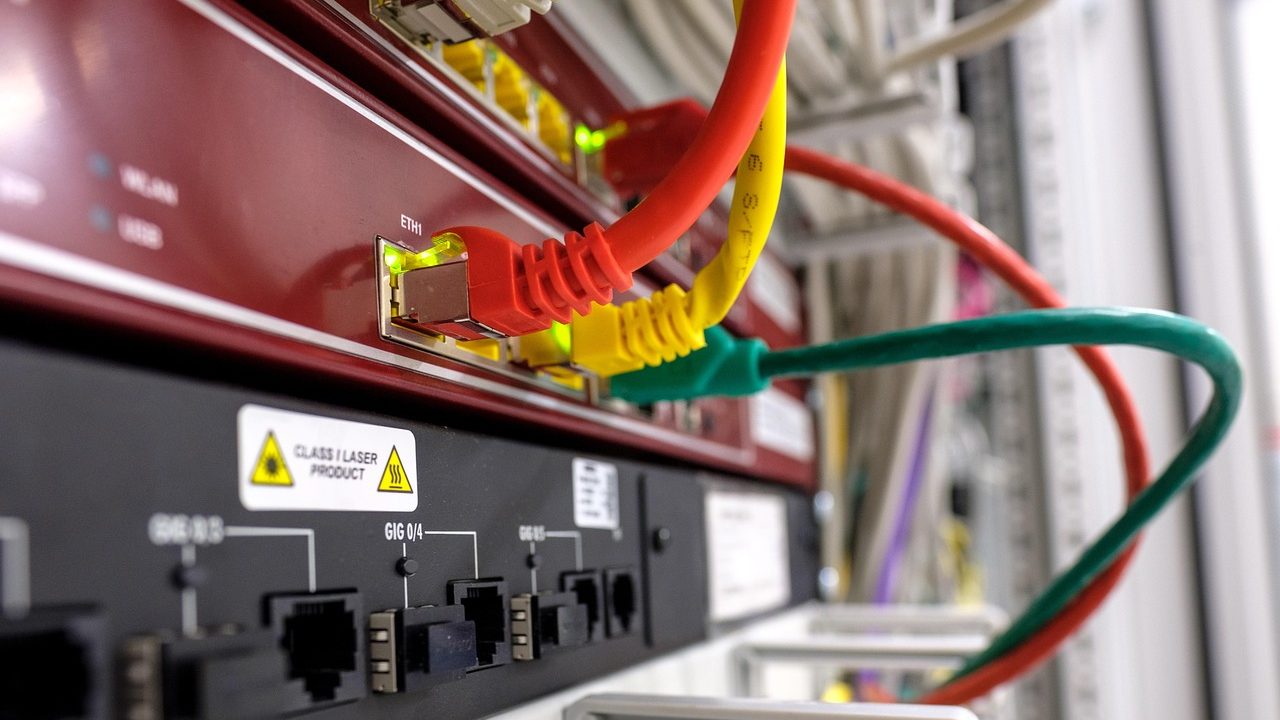
OpenWrt One, a router running open-source firmware on a certified open hardware design, scored 672 points — the second highest of the day. The significance is precise: open firmware running on proprietary hardware still carries chip-level attack surfaces that cannot be audited. A device where both the firmware and the hardware design are open and auditable represents a genuinely different security posture, directly responsive to the Volt Typhoon and Salt Typhoon intrusions of 2024 and 2025, in which threat actors established persistent access inside American telecommunications infrastructure by exploiting proprietary firmware on network edge devices with undocumented management interfaces. Network security practitioners in the HN thread were enthusiastic but noted that open hardware is necessary but not sufficient — a trustworthy supply chain for physical components remains a harder, unsolved problem.
A PCMag report, drawing on court documents from a hacker's prosecution, revealed that Microsoft can correlate user activity across devices and accounts via a Windows Device ID that persists through certain privacy-protective measures, including some account changes and resets. Microsoft provided law enforcement with telemetry linked to that ID in circumstances where the user reportedly believed the tracking chain had been severed. Windows telemetry has been a known privacy concern since Windows 10, but the specificity of its use in criminal proceedings makes the mechanism concrete. The story is expected to intersect with EU Digital Markets Act enforcement: documented evidence that Microsoft maintains persistent user identifiers in ways not clearly disclosed to users is precisely the kind of behavior Brussels regulators have found actionable.
The most technically alarming story of the day attracted less traffic than its severity might warrant. Researchers published a proof-of-concept exploit — CVE-2026-53359, dubbed Januscape — demonstrating a guest-to-host escape in KVM, the Kernel-based Virtual Machine hypervisor underlying the majority of cloud computing infrastructure, including substantial portions of Amazon EC2, Google Compute Engine, and Azure. A guest-to-host escape allows code executing inside a virtual machine to break out and run on the host system, collapsing the isolation guarantee that underpins multi-tenant cloud security. An attacker could theoretically rent a cloud VM, escape it, and access data or processes belonging to other customers on the same physical server. Researchers state they followed responsible disclosure procedures and notified major cloud providers before publication; HN commenters who appeared to be cloud infrastructure engineers reported patches being deployed, though the gap between patch availability and full deployment across large cloud environments can span weeks.
CoMaps, a fork of Organic Maps, rounds out the open-infrastructure cluster: fully offline, open-source maps with no tracking and no telemetry, structured under a governance model explicitly designed to prevent the kind of investor-driven pivot that transformed Maps.me from a beloved offline application into a commercial product its community felt had abandoned its original principles. The project scored 607 points and 133 comments.
Developer Tools and the Joyful Edges: Diaries, Agents, and a $4,000 AI Dev Kit

A GitHub repository called 'Riddle' drew 315 comments for a project that turns a reMarkable e-ink tablet into Tom Riddle's diary from Harry Potter: the user writes in ink, an on-device language model processes the handwriting, and a response appears in handwriting font on the next line. The implementation deliberately introduces latency to make the reply feel mysterious rather than instantaneous, because a diary that answers in 200 milliseconds breaks the fiction. In a moment of widespread anxiety about AI making computing feel impersonal and industrial, the project moved conspicuously in the opposite direction.
OfficeCLI from iOfficeAI, earning 187 points and 55 comments, addresses a more prosaic enterprise need: a command-line interface allowing AI agents to read and edit DOCX, XLSX, and PPTX files without launching Microsoft Office or calling Microsoft's APIs. As AI agents increasingly handle document workflows in enterprise settings, programmatic Office-format manipulation has become a genuine bottleneck. HN commenters compared it favorably with the traditional approach of using LibreOffice's UNO API in headless mode.
AMD's Ryzen AI Halo developer kit, reviewed by LTT Labs, carries a $4,000 price tag for a machine built around an Accelerated Processing Unit combining CPU and GPU on a single die, targeting developers who want local AI inference without a discrete GPU. The review reportedly found NPU performance competitive with a mid-range discrete GPU for inference workloads at significantly lower power consumption. The economics are notable: a developer spending $2,000 per month on API costs could theoretically recoup the hardware cost within two months. The 229-comment thread relitigated AMD's ROCm software stack — the company's long-standing CUDA competitor — with several commenters reporting genuinely improved recent experiences, though the CUDA ecosystem's lead in framework support and tooling has proven durable across multiple years of AMD promises.
kapa.ai's engineering blog post on pruning RAG context attracted 109 points by addressing a recognized pain point in retrieval-augmented generation architectures. Standard RAG pipelines retrieve multiple document chunks and pass all of them as context to a generation model; the retrieved material is often noisy, increasing cost, increasing latency, and potentially degrading answer quality. kapa.ai's approach runs a lightweight post-retrieval step that identifies which spans within the retrieved context are load-bearing for the specific query and strips the rest before generation. Claimed results show significant context-length reduction with maintained or improved answer quality; HN commenters requested ablation studies and raised questions about whether the pruning model itself introduces errors.
Open Source, Genomics, and the Question That Won't Resolve: Is Coding Still Worth Learning?
OpenSSH 10.4 released with characteristic quietness — 87 points, minimal drama. The update deprecates older cipher suites in preparation for post-quantum cryptography alignment and improves the SFTP subsystem. The project remains one of the best-maintained open-source security efforts in existence, and the brevity of the HN thread was itself a kind of compliment.
Steve Krouse's essay 'Learning to Code is Still Worthwhile' generated 223 comments against 230 points — a high comment-to-score ratio signaling genuine disagreement. Krouse argues that programming education retains value even as AI coding assistants accelerate, but that the valuable skills are shifting from syntax and API memorization toward higher-level reasoning: system design, problem decomposition, and understanding what correct behavior looks like. The HN thread fractured into distinct camps. One agreed but narrowed the claim: what remains valuable is not coding generically but developing a mental model of computation that enables effective use of AI tools. A second argued that the return on investment in deep programming expertise is declining relative to other skills even as the skill itself stays useful. A third predicted that within five years the capability gap between 'vibe coding' with AI and professional software engineering will be too narrow to support a meaningful wage premium.
A personal writeup on sequencing one's own genome using Oxford Nanopore's MinION device — a USB sequencer roughly the size of a thumb drive — placed the current cost of a whole-genome sequence at under $500 in reagents for someone willing to do the lab work. The Human Genome Project cost approximately $2.7 billion and took thirteen years to sequence a single human genome. The democratization is real and, on the evidence of the piece, already accessible to motivated hobbyists.
Two pieces of engineering history rounded out the day. Dolosse — the interlocking concrete wave-breaker shapes invented in East London, South Africa in 1963 by Eric Merrifield and since deployed on coastlines across every continent — inspired a warm 71-point thread about engineering knowledge that becomes global while its origin fades. The Rotman Lens, a passive microwave beamforming device from the 1960s that steers antenna beams without active phase shifters and is experiencing renewed interest in millimeter-wave 5G and radar applications, surfaced after its Wikipedia article received a significant update. Both threads reflected the HN community's recurring affection for the history of physical engineering.
The AI Margin Debate: What the Commodity Thesis Gets Right — and What It Might Miss
The GLM 5.2 margin collapse thesis — that Chinese labs producing near-frontier performance at dramatically lower cost will erode the pricing power of Western AI incumbents — is stated with considerable confidence in today's Hacker News discussion. The strongest counterargument is that benchmarks are not products. Enterprise software history is populated with technically superior challengers who won evaluations and lost markets because they could not match incumbents on integration, support, and risk profile. Anthropic and OpenAI have built substantial infrastructure around enterprise trust: SOC 2 certifications, HIPAA compliance frameworks, audit logging, and data residency guarantees. A Chinese-origin model, regardless of benchmark performance, faces a structurally different regulatory and trust environment in North American and European enterprise markets.
That defense, however, rests on assumptions worth probing. The EU's AI Act framework does not automatically favor American labs; a Chinese provider that invests in meeting EU requirements is, from a European procurement perspective, equivalently compliant. And the margin collapse thesis implicitly assumes that AI value concentrates in token generation, which is commoditizing. Enterprise AI is moving toward agents, orchestration, and reliable multi-step reasoning — capabilities that current benchmarks measure poorly and that may require architectures and fine-tuning not captured in GLM 5.2 comparisons.
Two concrete signals to watch: enterprise contract renewal rates at OpenAI and Anthropic, which would reveal whether lock-in is real or theoretical, and AI revenue disclosures from the hyperscalers — Microsoft's AI metrics and Google's Gemini API trends within Cloud segment growth. If those numbers show decelerating growth despite expanded use cases, pricing pressure is winning over volume expansion. The Q3 earnings calls in October will be a meaningful data point.
A correction also belongs in the record. A previous episode of this program referenced Ukraine striking Russian ships in the Caspian Sea. The Caspian Sea is landlocked, deep within Russian and Central Asian territory, and Ukraine has no credible power projection capability into that region. The claim was wrong, the error originated in the show's sourcing pipeline, and listeners who flagged it were correct to do so.