Zines, Geofence Warrants, Leaked Passports, and a Rocket Deal: The Stories That Defined the First Half of 2026
From a 30-year prison sentence for distributing political pamphlets to Rocket Lab's acquisition of the Iridium satellite constellation, Tuesday's Hacker News feed closed out the first half of 2026 with a cluster of stories mapping the contested boundaries between state power, corporate infrastructure, and individual rights.
“The local developer is independent at inference time but dependent on those actors for the training that makes the model useful”
How this was made Verified AI
Every Intellegix briefing is generated from that day's broadcast and run through automated checks before it publishes — with a human paged on any flag. Here is the trail for this edition.
Opening

One million leaked passports from a cannabis club software platform. A 30-year federal prison sentence for transporting zines. A nuclear reactor achieving criticality. Rocket Lab buying Iridium. The final day of June 2026 delivered a news cycle that touched civil liberties, commercial space, artificial intelligence, and the very architecture of the open internet.
The day's stories, surfaced by the Hacker News community at news.ycombinator.com, ranged from a Supreme Court Fourth Amendment ruling on geofence warrants to a new top-level domain designed for self-hosters, from Apple's long-secret Neural Engine architecture paper to a minimal Linux kernel booting on a 1989 Sega MegaDrive. Taken together, they sketch a technology landscape in which the gains in capability and the erosions of individual rights are arriving simultaneously.
Zines, Geofence Warrants, and a Million Leaked Passports: One Story About Power and Rights

A federal court sentenced Daniel Sanchez Estrada to 30 years in prison for transporting zines — self-published, hand-stapled, photocopied pamphlets. The Intercept framed the case as a five-alarm fire for First Amendment protections, and the Hacker News thread drew 347 comments. The zines in question were reportedly anarchist political literature, and the prosecution used a combination of material support statutes and sentencing enhancements originally designed for terrorism cases. Lawyers in the HN thread argued that the sentence signals to anyone publishing or distributing politically heterodox material that the legal architecture now exists to turn speech-adjacent activity into a decades-long sentence. Commenters drew comparisons to civil rights-era prosecutions of pamphlet distributors — comparisons described as uncomfortable precisely because they are not entirely wrong.
The material support statutes at issue were written in the 1990s and expanded after 2001. That they would eventually reach someone transporting physical paper publications would, observers noted, have seemed absurd twenty years ago.
On the same day, the Supreme Court issued a significant Fourth Amendment ruling on geofence warrants, landing with 537 points and 250 comments on HN. The Court held that geofence warrants — dragnet requests to Google for location data on everyone within a geographic area during a specific time window — require the same constitutional protections as traditional search warrants, mandating probable cause tied to a specific individual rather than mere geographic proximity. Law enforcement had been receiving tens of thousands of these requests annually through Google and Apple. An interesting technical footnote in the HN discussion noted that the ruling arrives as Apple's on-device privacy features are already reducing the volume of raw location data flowing through centralized servers — the legal and technical trajectories moving in the same direction simultaneously.
The civil liberties cluster was completed by a data breach at Nefos, which runs a platform called PuffPal used by cannabis clubs for age verification. One million passport scans were exposed. The Verge covered the story, and the structural issue it exposed was familiar: a legitimate compliance requirement — verify customer age — led to collecting sensitive identity documents at scale, which then lived in a startup-grade SaaS platform with no meaningful data minimization policy. The GDPR's data minimization principles are supposed to address this, but enforcement is inconsistent and retroactive. The HN post received only four comments and 25 points, a silence that was itself described as reflecting a kind of breach fatigue — the normalization of events that represent genuine harm to real people.
Qwen 3.6 27B and the Local AI Inflection Point
The highest-engagement post in the day's feed — 962 points and 629 comments — argued that Qwen 3.6 27B represents a genuine sweet spot for local AI development. The post, from Quesma, made a specific claim: at 27 billion parameters, Alibaba's Qwen 3.6 hits a crossover point where capability per gigabyte of VRAM becomes exceptional relative to both smaller and larger models. For developers who have found 7B and 13B parameter models noticeably weaker on complex reasoning tasks, the argument is that Qwen 3.6's training methodology closes enough of that gap to be genuinely useful for production coding tasks, not toy demos.
The HN thread included benchmarks against GPT-4o mini, Claude Sonnet, and Gemini Flash, with consistent findings that for specific coding and technical reasoning tasks the gap is narrow enough to make local deployment worthwhile — particularly for developers prioritizing data privacy, latency, or cost at scale. One commenter reported running it on a single 4090 GPU at interactive speeds, a benchmark the local AI community had been waiting for.
Alibaba's strategic logic in releasing open-weight models at this capability level was scrutinized in the thread. The release expands the market rather than directly stealing customers from OpenAI or Anthropic — many developers going local with Qwen are not former API customers but developers who could not afford or would not risk API dependency in the first place. Alibaba is cultivating a developer ecosystem in a segment the US frontier labs have not prioritized.
Three other AI stories rounded out the day's coverage. Ornith-1.0, a self-improving open-source model focused on agentic coding from DeepReinforce AI, drew 218 points but also sharp HN skepticism: several commenters pushed back on the 'self-improving' label, arguing that what is described is standard reinforcement learning from human or AI feedback, not genuine recursive self-improvement — the model is not rewriting its own weights autonomously. LongCat 2.0, a mixture-of-experts model with 1.6 trillion total parameters but only 48 billion active at any inference step, drew 170 points; the MoE architecture means effective compute per token remains close to that of a 48B dense model. Finally, an arXiv paper on Apple's Neural Engine architecture — covering the microarchitecture, programming model, and performance characteristics of custom silicon present in Apple devices since the 2017 A11 Bionic — gave ML engineers optimizing for on-device Apple deployment what was described as a reference manual they did not previously have.
Dot-Self, eIDAS, and the Managed Internet
Several stories converged on a single anxiety: that the open internet is gradually being replaced by a managed internet controlled by a small number of platform operators. The dot-self TLD proposal, from the Human-Centered Computing Foundation, drew 540 points and 313 comments. The new top-level domain is designed specifically for self-hosting, with registrar structures and DNS policies intended to protect individual operators rather than commercial interests. The existing TLD ecosystem, proponents argued, is built for commercial registrants — even .org, intended for non-profits, is now controlled by a private equity-backed registry. The HN thread went deep into ICANN politics.
The eIDAS 2.0 story, framed by the Waag Institute as a gift to Google and Apple, illustrated the implementation gap in European digital policy. The EU regulation mandates digital identity wallets for EU citizens — an attempt to create European digital sovereignty — but the wallets must live on smartphones, meaning they will live inside Apple's App Store or Google's Play Store ecosystem. European digital identity infrastructure thereby has a dependency on American corporate goodwill built into its foundation. The Digital Markets Act's 'gatekeeper' obligations represent a different regulatory approach — imposing behavioral remedies in advance rather than waiting for harm to materialize and then litigating — but the underlying infrastructure problem remains.
A native graphical shell for SSH, drawing 323 points and 186 comments, connected to the same theme at a more practical level. The project adds a graphical layer to SSH sessions, enabling drag-and-drop file transfer, inline image rendering, and persistent terminal state across reconnections. The HN discussion split between enthusiasm for reduced friction in managing remote servers — anything that lowers that barrier keeps more developers running their own infrastructure rather than delegating to AWS or Azure — and skepticism about adding complexity to a security-critical protocol whose safety properties derive partly from its simplicity.
Memory Safety, GPU Kernels, and Linux on a 1989 Games Console
The fil-c project's work on memory-safe context switching — the fundamental operating systems operation where the CPU saves one process's state and loads another's — drew 146 points and 25 comments. Traditional context switching is written in assembly or very low-level C because it requires direct control over register state. Fil-c is exploring whether a language runtime can provide that same control without permitting the memory safety violations that have made systems code historically exploitable. If the approach holds up, it becomes an argument for memory-safe systems programming all the way to the kernel-adjacent layer — territory the Rust-for-Linux project has been approaching from a different direction.
Zig's SPIR-V backend progress report, drawing 75 points and 38 comments, showed real movement on a long-standing roadmap item. SPIR-V is the intermediate representation used by Vulkan and other modern graphics and compute APIs; getting Zig to compile to it means developers could write GPU compute kernels in a single language across CPU and GPU code paths. A separate educational deep-dive into CUDA kernel execution — 264 points, 31 comments — walked through the full stack from compilation through PTX intermediate representation to how the CUDA driver schedules work on streaming multiprocessors.
The LinuxMD project, which is getting a minimal Linux kernel to boot on a Sega MegaDrive — a 1989 console with a Motorola 68000 CPU running at 7.6 megahertz and 64 kilobytes of RAM — drew 126 points and the characteristic HN mixture of 'why would you do this' and 'I respect that someone did this.' The answer, as with the annual Old Computer Challenge (72 points, 30 comments) in which participants use a machine with 512 megabytes of RAM or less as their primary computer for a week, is that extreme constraints force understanding of memory management, process scheduling, and device drivers that modern abstraction layers conceal. A post exploring the original 1960 implementation of Lisp on the PDP-1 — bootstrapped on hardware with 4,096 18-bit words of total memory — offered a similar meditation on what computing fundamentally is. Karolina Mgdubiel's honest, detailed account of building a custom octocopter from scratch with no prior hardware experience rounded out the segment, valued in the HN community as an example of knowledge-transfer writing that shows how software engineers navigate unfamiliar physical domains.
Rocket Lab Buys Iridium, a Reactor Hits Criticality, and the Infrastructure Bets of 2040
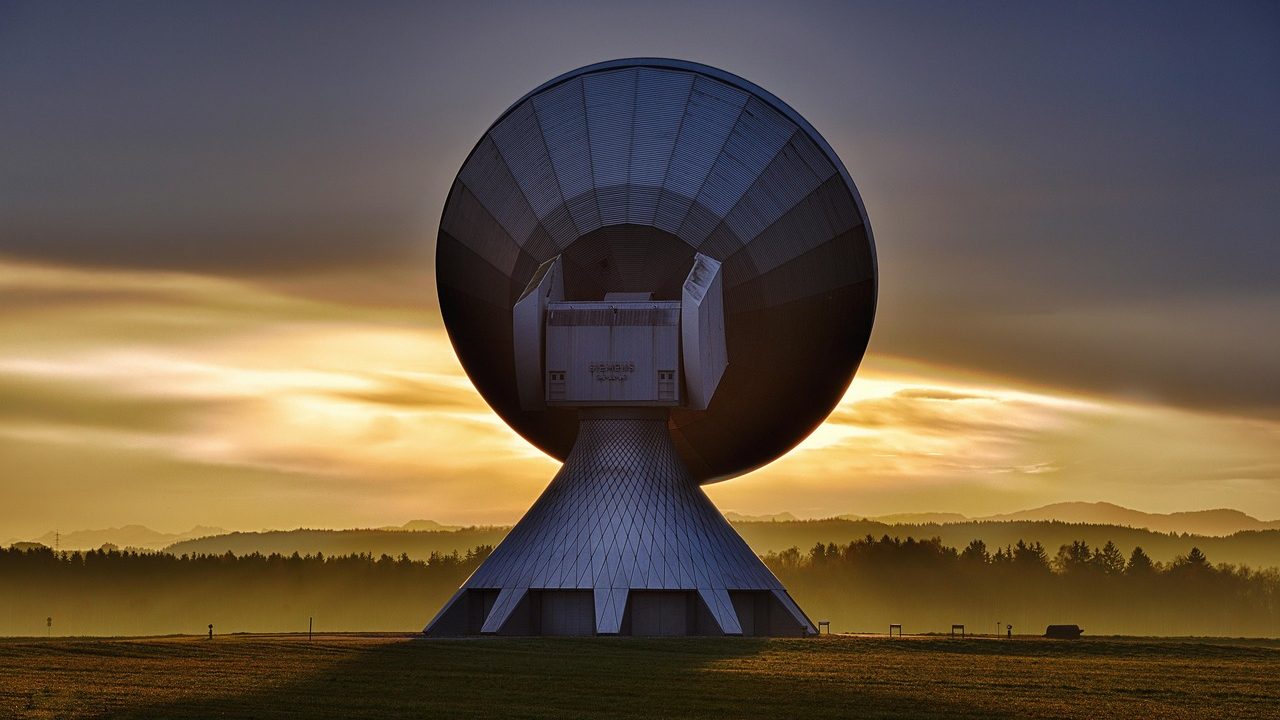
Rocket Lab's acquisition of Iridium drew 419 points and 277 comments — the biggest corporate news in the day's feed. Iridium operates 66 active low-Earth orbit satellites providing global satellite phone and data service. The company famously went bankrupt in 1999 after burning through billions on a constellation that launched too early for the market, was acquired at pennies on the dollar, and quietly became indispensable infrastructure for aviation, maritime, and remote industrial operations over the following two decades.
The strategic logic is layered. Rocket Lab has been expanding from launch services into space systems, building satellites and satellite components as well as rockets. Acquiring Iridium gives it an operational constellation, a revenue-generating satellite communications business, and a demonstration platform for next-generation follow-on services. The HN thread drew comparisons to SpaceX's vertical integration, though the comparison has limits: SpaceX built Starlink from scratch, while Rocket Lab is acquiring mature operational infrastructure with a 25-year track record. The Iridium constellation's cross-linked architecture — satellites relaying data directly between each other rather than bouncing signals to ground stations — provides truly global coverage including polar regions that geosynchronous satellites cannot reach and most LEO constellations do not prioritize. For defense, search and rescue, and scientific operations in Antarctica or the Arctic, there is reportedly no substitute. The HN discussion split on whether Rocket Lab should move Iridium upmarket toward broadband competition with Starlink or keep it in the narrowband niche where it faces essentially no competition.
On the same day, Antares Industries announced that their Mark-0 reactor achieved criticality — the point at which a fission chain reaction is self-sustaining and the neutron population is stable. The post drew only 31 points and 12 comments, but the milestone is not one that can be faked or approximated: either the physics works or it does not. Antares is a private company working on compact nuclear reactors, and the Mark-0 is its first prototype.
The open-source low-tech movement story — 296 points, 60 comments — and a dark sky lighting advocacy piece from SavingOurStars.org — 216 points, 40 comments — offered a counterpoint to the day's capability-forward news. OpenSourceLowTech.org catalogues designs that can be built with locally available materials, repaired without specialized tools, and understood without an engineering degree. The dark sky lighting discussion examined the genuine environmental science of artificial light at night: disrupted circadian rhythms in humans and animals, interference with insect navigation, effects on plant growth cycles. The technology to fix light pollution is simple and mature; the obstacles are policy and incentives, not innovation. An Economist piece asking whether every newborn's DNA should be sequenced attracted only 5 HN comments, but those that appeared noted the distinction between existing universal newborn heel-prick screening for metabolic disorders and whole-genome sequencing — questioning whether the difference is one of degree or of kind, given the volume, sensitivity, and permanence of genomic data.
What If the Local LLM Story Is Wrong? And a Correction
The day's most confident claim — shared by the HN community and the wider commentary — is that Qwen 3.6 27B represents a genuine capability breakthrough and that capable models running on consumer hardware is straightforwardly good for developer autonomy and privacy. The counterargument is worth examining. The infrastructure that makes Qwen 3.6 27B useful — training compute, reinforcement learning from human feedback labor, evaluation infrastructure — still requires frontier-scale investment. Alibaba spent enormous resources creating the model, and the open-weight release is a strategic decision, not a gift. Strategic decisions can be reversed or redirected.
Even with open weights, the training capability that produces new model generations is concentrated in a small number of powerful actors. The local developer is independent at inference time but dependent on those actors for the training that makes the model useful — a different situation from open-source software, where contributors with sufficient skill can meaningfully shape the core product. A second assumption worth stress-testing: that 27 billion parameters is the right count for this generation of hardware. The benchmarks cover coding, question answering, and summarization. If the tasks that matter most for the next wave of software development require capabilities that only emerge at 70B or 200B parameters, the current sweet-spot moment may prove to be a temporary window before the capability bar moves out of reach again.
Three signals are worth watching: whether open-weight model releases continue to keep pace with frontier capability improvements or whether the gap widens; whether 27B local models stay in the developer tier or begin appearing in production systems generating real business value — at which point the economics of local deployment and Alibaba's strategic calculus both change materially; and whether regulatory pressure constrains future releases, given that both the EU AI Act and proposed US legislation contain provisions that could restrict releasing model weights above certain capability thresholds.
The episode also carried a correction. In May, the show made a claim about Ukrainian long-range strikes hitting Russian ships in the Caspian Sea. That claim was wrong: the Caspian Sea is landlocked and hundreds of miles from Ukrainian-controlled territory, Ukraine has no credible capability to strike naval vessels there, and no such attacks occurred. The error was described as a failure of verification — dramatic framing accepted without applying basic geographic common sense — and was named plainly.